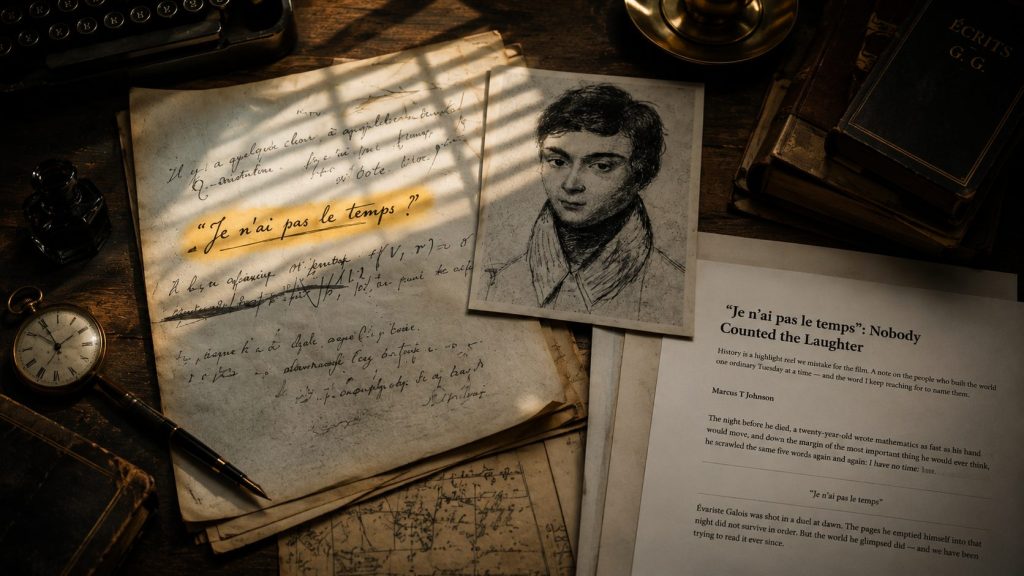


The night before he died, a twenty-year-old wrote mathematics as fast as his hand would move, and down the margin of the most important thing he would ever think, he scrawled the same five words again and again: I have no time.
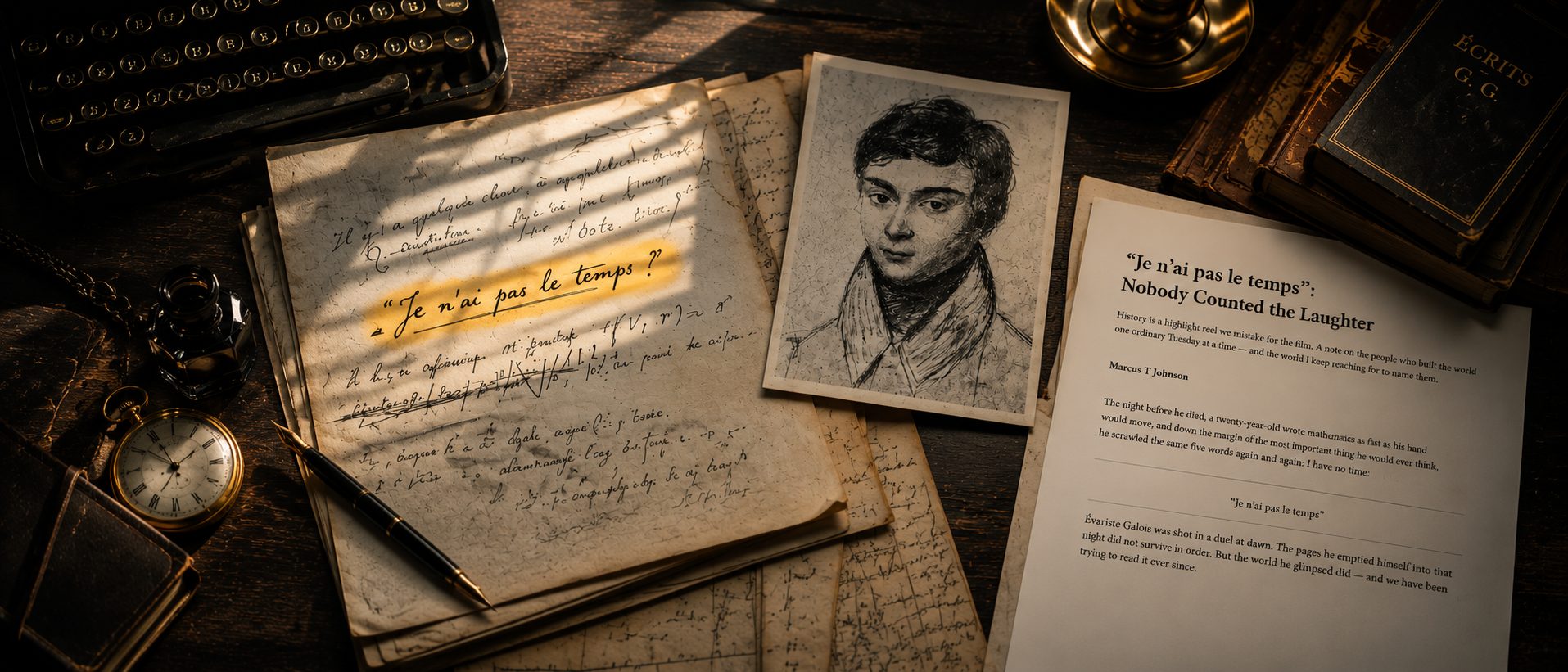
Évariste Galois was shot in a duel at dawn. The pages he emptied himself into that night went unread for years. When someone finally understood them, they founded a branch of mathematics we still teach to twenty-year-olds. The work won completely. The boy lost completely. And the world, as it tends to, kept the cheaper half.1
I keep returning to that margin note. Five words, and the whole problem is in them — not his problem but ours. The problem of what gets kept.
The record is almost empty
Here is a number that should unsettle you more than it does. Of everyone who has ever lived, the fraction who surface anywhere in the historical record — a name, a date, a single line in someone’s chronicle — is vanishingly small. Some estimates put it near one in hundreds of thousands. The exact figure can’t be trusted and doesn’t need to be. What matters is the direction of the error.
We read history as a chain of milestones, each great figure handing the torch to the next, and in hindsight the line looks so clean it feels inevitable. The line is clean because everything that wasn’t a milestone got thrown away. The record is not the story of what happened. It’s a highlight reel, and we have spent centuries mistaking the reel for the film.2
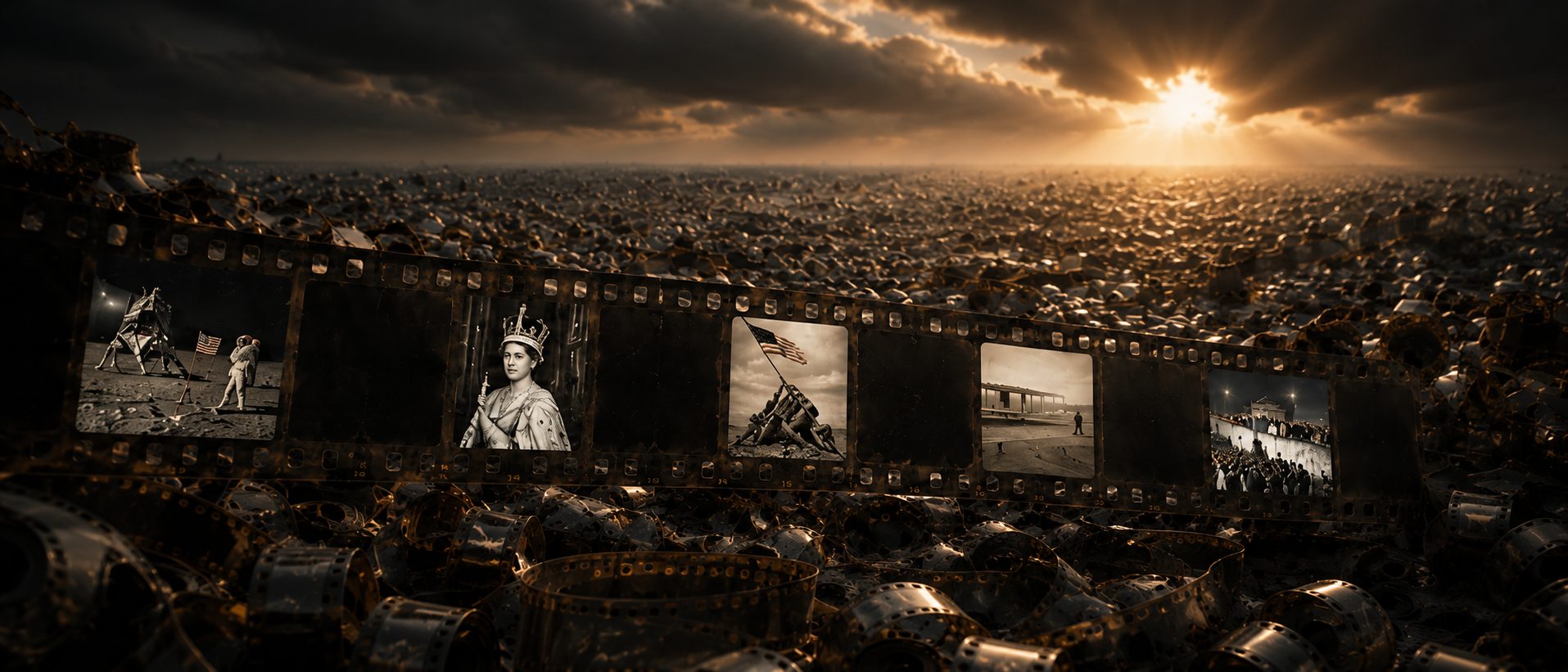
You can see the splice marks if you look. Chroniclers raise the contemporaries they happen to find compelling, and then hindsight does the cruel part: it reads the survivors backward into a logical progression, as though events were always steering toward the few names we kept. The rest perished without note — not because they did nothing, but because nothing they did on most days announced itself as a Tuesday worth recording.
What the silence is fair about
It would be easy, and wrong, to sweeten this — to decide the forgotten were all secretly noble, the true heroes, the salt of the earth. The silence grants no one virtue. It swallows the patient elder and the petty tyrant on identical terms, the steward and the brute into the same blank.
So the unrecorded layer is vast, and its moral weight is neutral. Two separate facts, and I want them kept apart, because fusing them is exactly the lazy reflex I distrust. The interesting claim was never about who was good.
It’s about what lasts.
The asymmetry that builds a world
Bad leadership subtracts. The strongman takes, breaks, hoards, narrows everything to a chokepoint at himself — and when he goes, the situation mostly resets, because the whole arrangement was built to run through one person who is no longer there. Nothing accumulates. That’s the design.
Good leadership compounds. The person who clears an obstruction and hands the work onward leaves a residue the next person stands on, and it carries forward whether or not anyone writes down that it did.
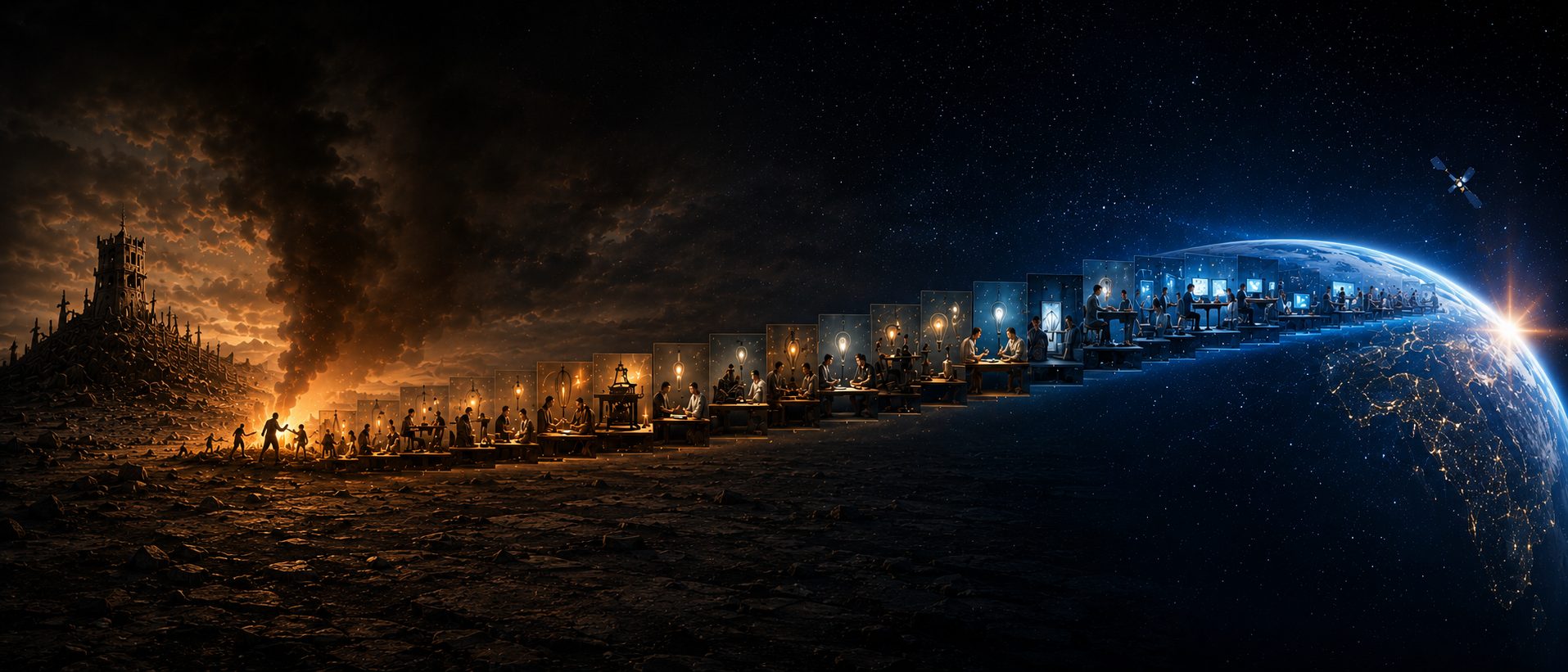
This is why you can sit where you’re sitting, reading on a device descended from ten thousand uncredited refinements, arguing with a frontier intelligence for the price of a sandwich. Not because the past was mostly kind — it was mostly ordinary, and a fair share of it was monstrous. You inherit a built-up world because kindness is the part that survives forward. The ratchet turns one way. Subtraction resets; contribution stacks. Over enough centuries the stacking kind wins on net — not by being the majority, but by being the part that adds.3
A word for the figure
I’ve been turning a word over for the person who runs that ratchet on purpose. The Obsoleader — a steward whose whole function is to make themselves unnecessary.
It arrives sounding like an insult. Obsolete leader. A relic, a man who doesn’t get it. The misreading is the point, because the figure is the exact inverse of the one we’re trained to admire. The strongman’s value proposition depends on the unit being too big to govern itself; he needs the flow to route through him, so he quietly degrades everyone else’s capacity in order to stay indispensable. The Obsoleader does the opposite — widens the channel, clears the blockage, and takes the obscurity that follows as the cost of the work continuing without him.
The machinists who made one small thing better and let the next hand build on it. The translators who carried Greek thought across centuries so there would be anyone to be famous on the far side. The quartermaster three miles behind the general, solving how forty thousand people eat. None of them in your textbook. All of them the reason the textbook exists. The Obsoleader is, almost by definition, not the name on the page — and, hardest of all, is fine with that.

Nobody counted the laughter
Now watch the same machinery run somewhere you can feel it on your own skin.
No one has a figure for how much joy a single life holds. There’s no number for the laughter in a kitchen, or the kind you have alone over something nobody else would find funny. Joy generates no event. It files no headline. So the news is built entirely from the tears — the disaster, the collapse, the war — because catastrophe records itself and a happy Tuesday records nothing.
Measure a human life by its news coverage and you’d conclude it was unbroken catastrophe. But the real ledger of most lives is the uncounted part: small competence, quiet warmth, the long stretch of peace between two dated wars when life was simply lived and yielded no milestone to pin.
It’s the same trick the history book plays. The book keeps the wars and skips the peace; the news keeps the tears and skips the laughter. Both run doom-weighted — not because life is mostly doom, but because doom is mostly what gets recorded. The missing number for the laughter isn’t a gap in the data. It is the argument.
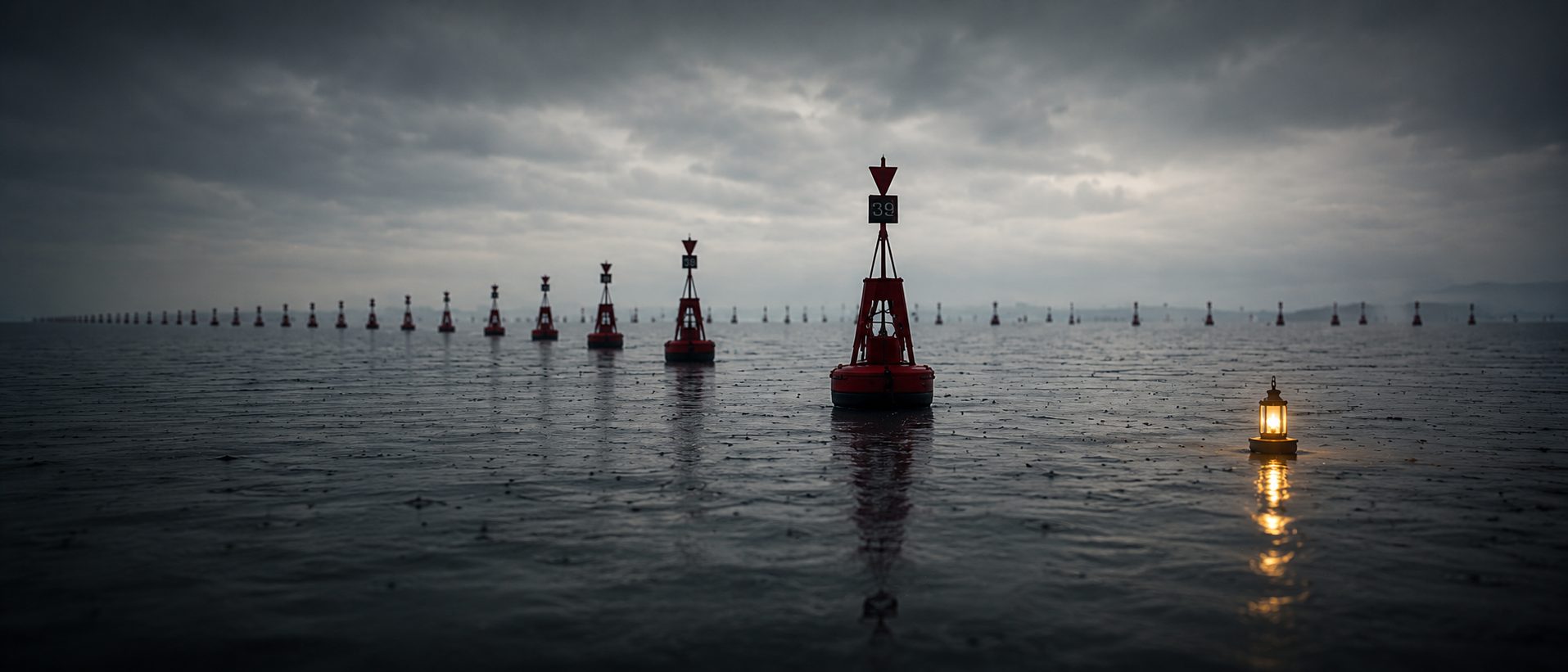
Notice that the disasters come easily to mind — Alexandria burning, the Black Death, the Cultural Revolution — because catastrophe files itself. What doesn’t come to mind is the quiet century of rebuilding after each: the hands that re-copied what survived the fire, the wage gains and the loosening of serfdom that followed the plague, the substrate reasserting itself across generations. We can name the wound and not the healing, and we mistake that for a fact about history when it’s only a fact about the record.
Back in the room
I’ve started writing these as short plays — people standing at the moment they cannot yet know what they’ll become, visited by someone who holds the whole arc and has to decide, second by second, how much of it to set down. Van Gogh, minutes after the ear, asking only whether the work is falling into a hole, for whom yes, it matters and not for you turn out to be one sentence. Hedy Lamarr at a drafting table in 1942, sketching the idea that now lives invisibly in every pocket on earth, already half-aware that her famous face was a thing that stopped people looking.
But here is the one I keep returning to. The room, the night, the candle burning down toward the dawn that’s coming for him. He doesn’t look up from the page.
“How many years,” he says.
The visitor doesn’t answer quickly enough.
“That many.” He sets the pen down — the first time all night. “So it works. The thing not one living man in Paris will glance at. It works, it waits, it wins. And I’m not invited to the part where it wins.”
“No.”
“Do you know what I’d give.” Not a question. “Not for the winning — they can have the winning. For the time. Ten more years at this table and I’d build the whole of it, not these scraps down the side of the page.” He lifts the sheet. In the white margin beside the most important thing he will ever think, the same five words, over and over.
“It’s not nothing, the note,” the visitor says. “You’re wrong about that. The note is the part that lives.”
He almost smiles. “Then it’s a cruel arithmetic. The note lives, the boy dies, and the world keeps the cheaper half.”
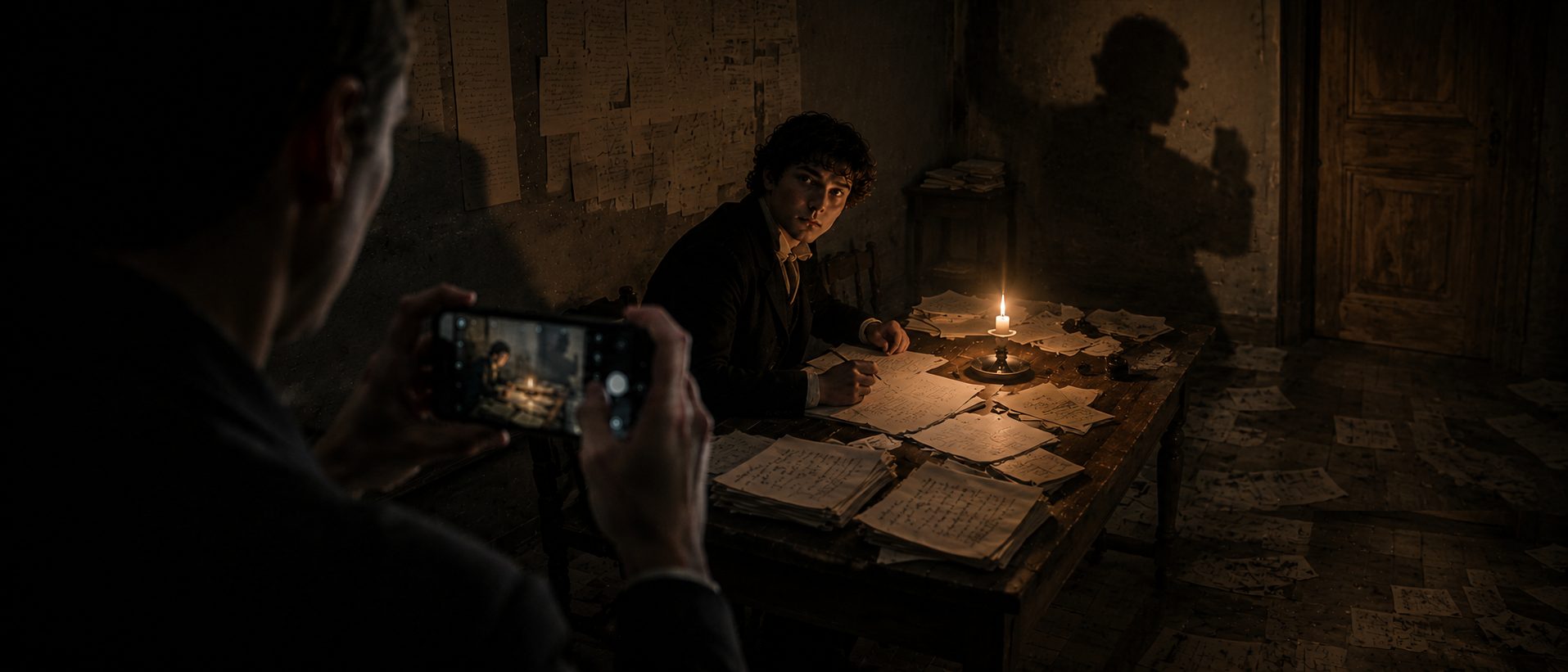
The visitor never arrives superior. That’s the rule that keeps the thing honest. They come humbled by the person in front of them, carrying the future the way you carry a heavy object you can’t put down — and everything they know lands as loss, look how much got thrown away, never as a trick played on the past.
The gap, and what to do about it
I have a couple of index entries of my own. A mention here, a credit there — a marginal, digital I was here. And I’d be first to tell you they badly undersell the twenty years behind them. Not a complaint. The cleanest proof of the thesis I can offer: I’m a data point who knows the data point is lossy.
We attribute civilization to a named few and call it buildup, when every one of them stood on a crowd of actual change-makers the record had no shelf for. We hand our own quiet advances to luck, because the part that never made a headline feels like it doesn’t count.
It counts. It was always where the building happened.
The world grew too big to hold in regard — too big for the cognitive ceiling we actually have — so we built a record that keeps the sliver and loses the substance, then mistook the sliver for the story.4 You don’t fix that by recording more. You fix it at the size where regard is still cognitively real, one small circle at a time, by telling the people whose warmth and work will never reach anyone’s encyclopedia that you noticed — while it’s still pencil and a candle, before the world decides it only wants the still, convenient version.
Nobody is going to count the laughter for you. You lost count long time ago.
That’s a job well done.

Redeem Coin Codes


