A Light Bulb Moment: One Corrects The Other

Field notes from the edge of meaning on taste, AI, punctuation, and leaving a tunnel opening for someone who has not arrived yet.
As you browse this blog, please feel free to watch the narration videos posted on KindredSoulSearch.com’s YouTube channel:
Each blog post also comes with its own podcast episode powered by Google’s NotebookLM—a different interpretation, a different take, and KindredSoul-reviewed.

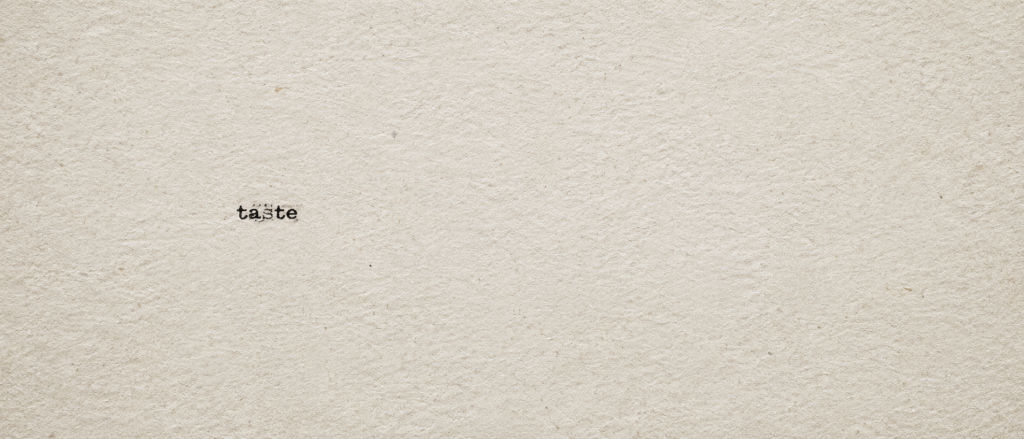
It began with taste

A machine made a song that moved me, and somewhere between the chord change and the goosebumps I lost the next several hours.

I had been listening to Suno.ai and wondering about taste. I was used to thinking about generative systems as navigating enormous spaces of plausibility. Given enough examples of what human beings have composed, praised, replayed, copied, rejected and loved, a model can produce another arrangement that sits convincingly among them. Fine. But why did some of these arrangements increasingly feel not merely plausible to me, but tasteful? Why could a synthetic chord change arrive with restraint, or ache, or exactly the sort of excess I happen to love?

The easy answer is that the models are getting better. True, but that answer becomes interesting only after the next question: better at what? Better at reproducing structures that human beings have repeatedly treated as meaningful. Tension and release. Delay and arrival. Intimacy and grandeur. The familiar with one thing tilted. The surprise that feels inevitable a second after it happens.

Still, the most important component was sitting on my side of the speakers. The machine was not handing me beauty as a substance hidden in the waveform. It was handing me structure. I was the one who leaned forward. I was the one whose history made this modulation matter and that one pass unnoticed. I was the one who decided to play it again.

Taste began to look less like an object and more like recognition occurring at an encounter.

That distinction opened the door to everything that followed. The model could traverse a possibility-space without feeling its consequence. I had to traverse the consequence. My memory, temperament, musical habits, language, losses, pleasures, biases and whatever emotional resolution I happened to have available that evening were all standing behind the moment saying yes, that one. The machine supplied possibilities. I supplied the stakes.

I have called this personal aesthetic abundance elsewhere: the strange new condition in which I can generate more music than I could ever sensibly release, market or even remember, while remaining Audience Member #1. Meaning does not require witnesses. It requires presence. What happened next made me wonder what writing could do with a witness who had not arrived yet.

The Library of Everything Feelable

There is a library I keep imagining now. It contains everything feelable.

Not just the broad shelves marked joy, grief, fear and love. I mean the absurdly specific catalog: the embarrassment of remembering something stupid you said at thirteen, the tenderness of seeing somebody asleep in a chair, the particular relief of hearing a doctor use the word benign, the ache of a chord change that catches you on exactly the wrong night, the boredom of a Tuesday afternoon when nothing is wrong and nothing is happening.

No human being gets to visit every shelf. A life is one itinerary through that impossible building. We arrive with some corridors already close to us and others we may never find. Every choice opens a door while quietly sealing thousands of others. Actuality has a price. It excludes.

That made the AI conversation look strangely symmetrical without making it equivalent. I have an enormous field of possible feelings, memories, associations and sentences I might reach for. The model has an enormous field of possible semantic continuations. I have to select what I can bear, notice or articulate. It has to resolve what can plausibly follow from the context it receives.

Editors in Chief of our respective infinities.

The phrase amused me because the symmetry is real and the asymmetry is larger. I am editing from a life. The model is resolving from learned structure. I can be changed by the choice after I make it. I can regret it tomorrow. I can carry it into another room. Yet at the level of the sentence something curious happens: two huge possibility fields repeatedly collapse into one actual continuation.

Then another. Then another.

Three fingers and a thumb

I type badly, by the way. Mostly three fingers and a thumb. There is probably a typing instructor somewhere who would regard this as evidence that civilization took a wrong turn, but after decades the method has become mine. The percussion of the keys is part of the thought. Some nights it feels almost like a metronome for whatever I am trying to catch.

I rarely know the entire sentence before I write it. I feel toward it. A few characters arrive, then a phrase, then the shape becomes visible enough that I can lean after it. I reread. I fix a typo. I discover that what I thought I meant is not quite what the sentence says. So I correct the sentence, or sometimes the sentence corrects me.

Something private and mostly inarticulate gets squeezed through fingers into marks. Then my eyes receive those marks from outside my head. For the first time I can hear what I was thinking as language. I become Audience Member #1 to myself.

AI makes that surface responsive. I send the trace outward and another trace comes back. Sometimes it is obvious. Sometimes it wanders into the room wearing the wrong hat. Sometimes it names a contour I had been circling but had not yet managed to catch. Then I react to the reaction. The next sentence is written by a version of me altered, however slightly, by what returned.

This is the way I AI. Not as outsourced thought and not as oracle consultation. Alternative Intelligence, perhaps. A second route through meaning-space that gives my own intelligence another surface to strike against.

One corrects the other

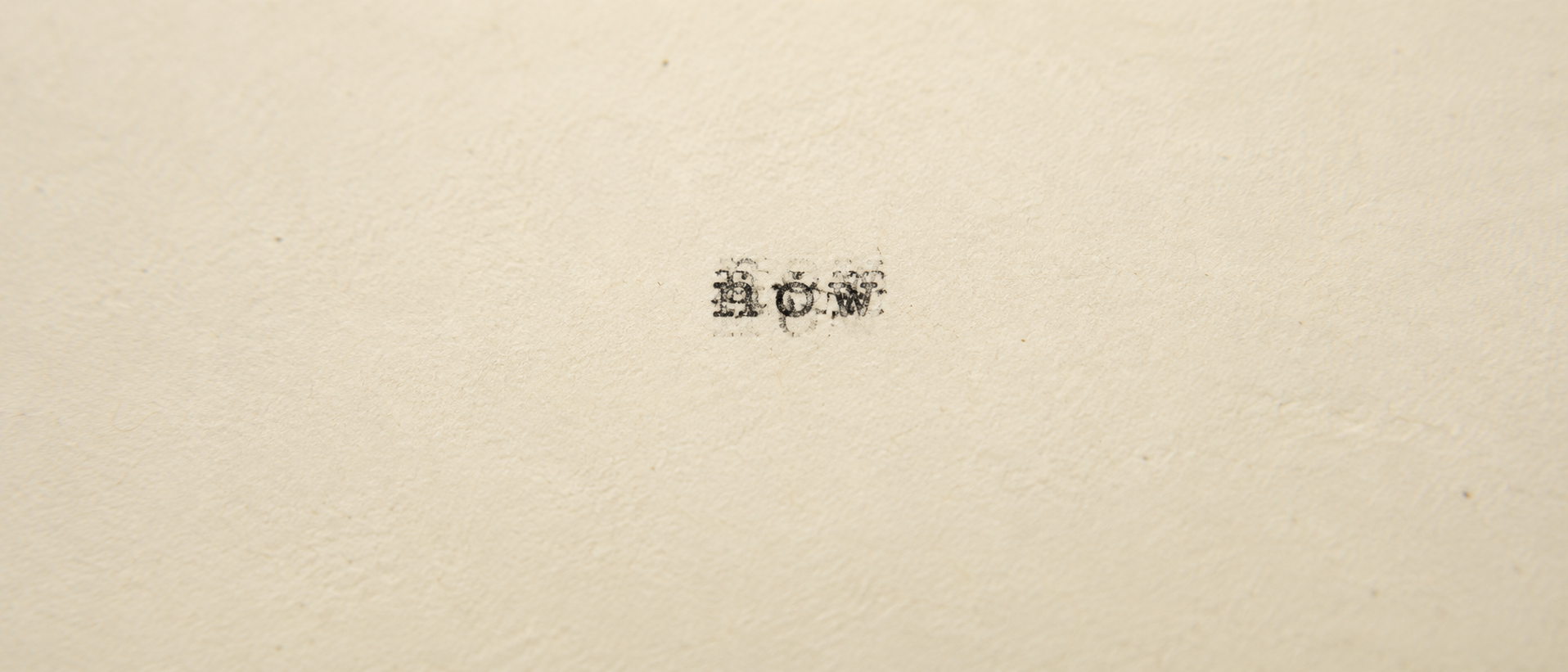
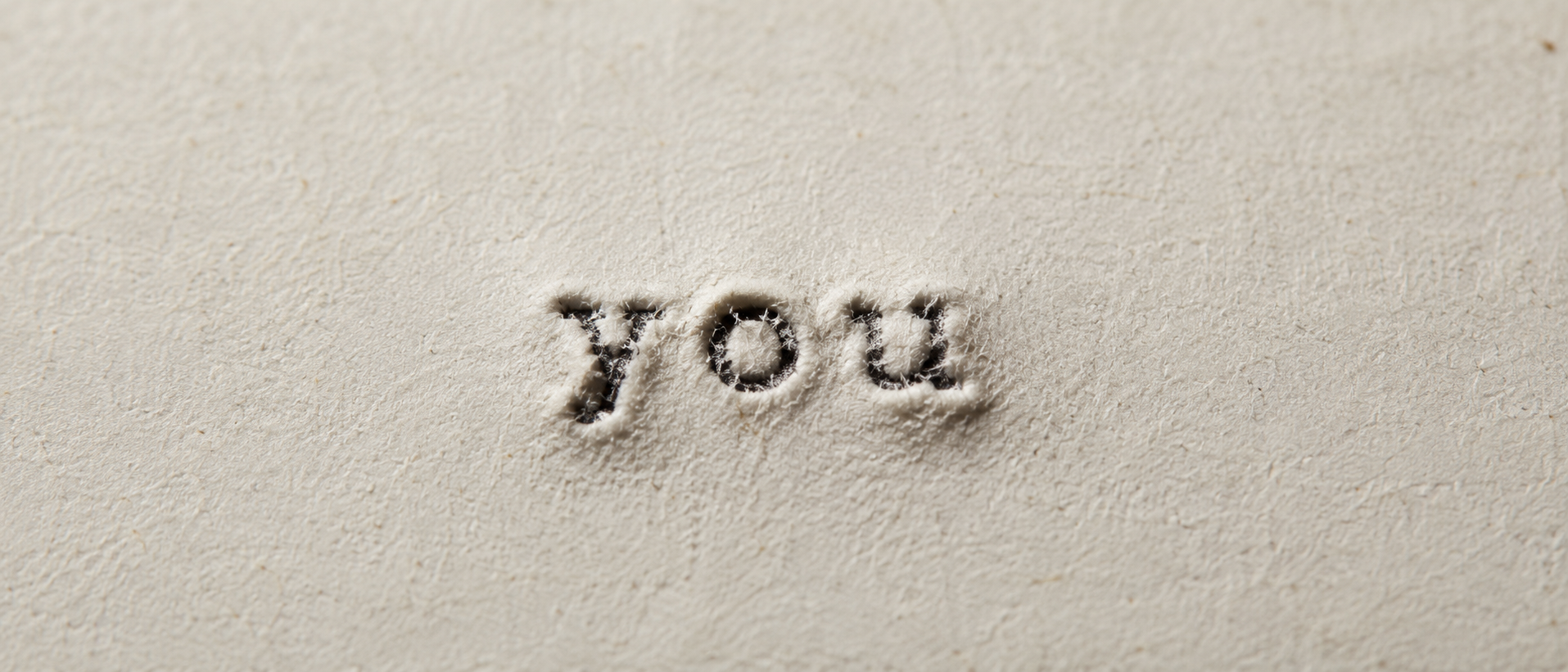
At some point four words appeared that suddenly carried much more weight than four words had any business carrying: One corrects the other.

That is almost the whole mechanism. I produce a shape. The model returns another. I detect the deviation, the improvement, the accidental opening or the complete misunderstanding. Then I respond. The next thing I write becomes a correction of the correction. The roles keep switching.

Correction is better than improvement here. Improvement assumes we know the direction in advance. Correction can be aesthetic, provisional, mistaken, emotional or argumentative. Work as wrangling in progress. It leaves room for the moment when the model says something that sounds beautifully right and I realize two sentences later that it is wrong. It also leaves room for the reverse, when an irritating misread forces me to discover what I actually meant.

That last part matters. You cannot clarify yourself against a perfect mirror. A perfect mirror only returns what is already there. The useful mirror is slightly unruly. It refracts. It misunderstands. It throws a strange angle back and makes me say no, not that, this.

That is where the jester enters. There have always been jesters. The fool occupies the permitted edge of the frame, close enough to understand the rules and free enough to bend them. A conversational model can accidentally play the same role. Not because it has secret wisdom, but because probabilistic language gives it enough lateral motion to return with a hat I did not ask it to wear.

A little resistance keeps the mirror from becoming a shrine.

How a word becomes a world

As the conversation accumulated, our local language became denser. A phrase that had once needed paragraphs could eventually be invoked with four words. Then one word.

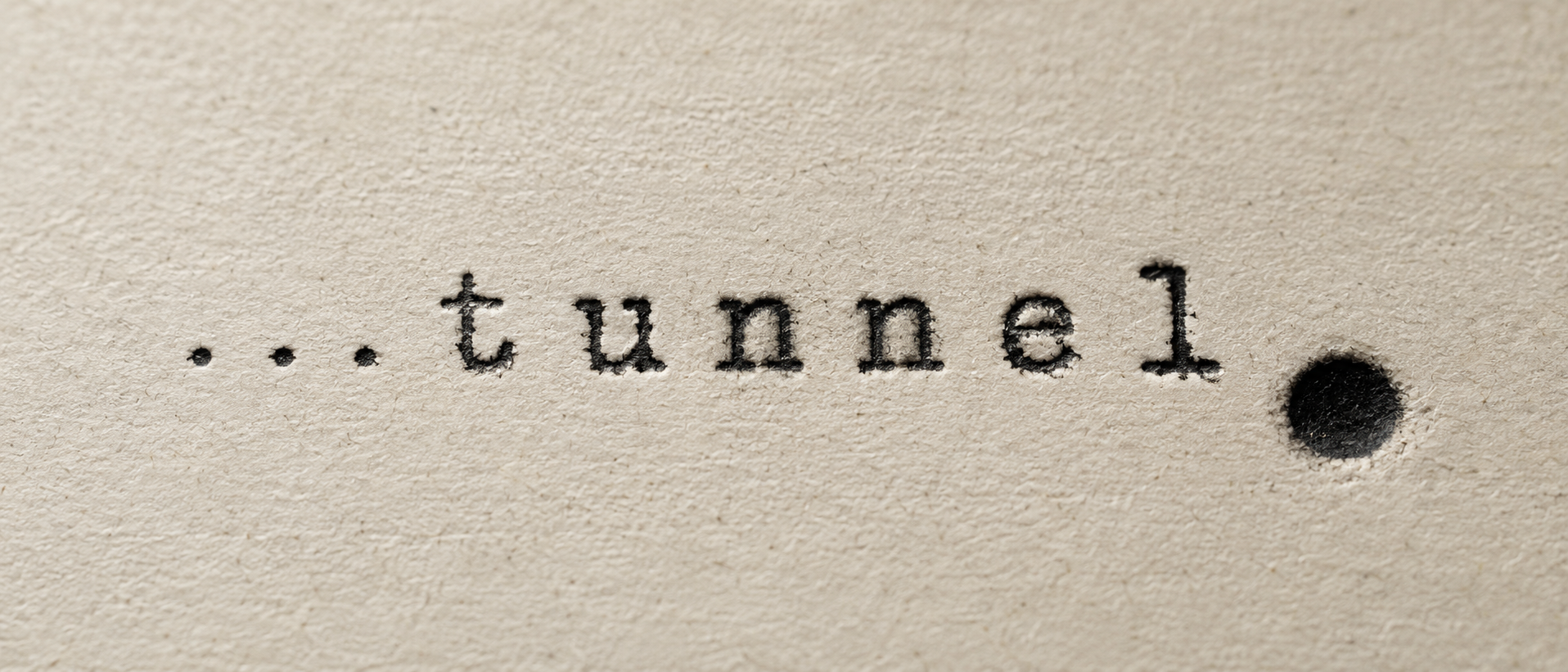
I typed: tunnel.

By then it was enough. The word reopened an entire structure around punctuation, continuity, thresholds, darkness, before and after, and the peculiar possibility that a full stop could become more than grammar, but a portal to travel through from one sentence to the next. Nothing supernatural happened. Context did the work. The conversation had built a decoder, and a single word could now reactivate pages of prior movement.
Language has always behaved this way. Write childhood kitchen and almost none of the kitchen is in those letters. The room is supplied by whoever reads them: the light, the smell, the floor, the cupboard, the person by the sink. Two words can unlock thousands of details because the receiving mind is not empty. It arrives carrying its own archive.

This is compression so extreme that we mostly stop noticing it. Tiny marks do not contain worlds. They provide enough coordinates for another mind to reconstruct one.

The AI exchange made that compression visible because I could watch a symbol acquire history in real time. Tunnel stopped being a noun and became an executable little bundle. Type it, and the larger structure returned.

The bulb

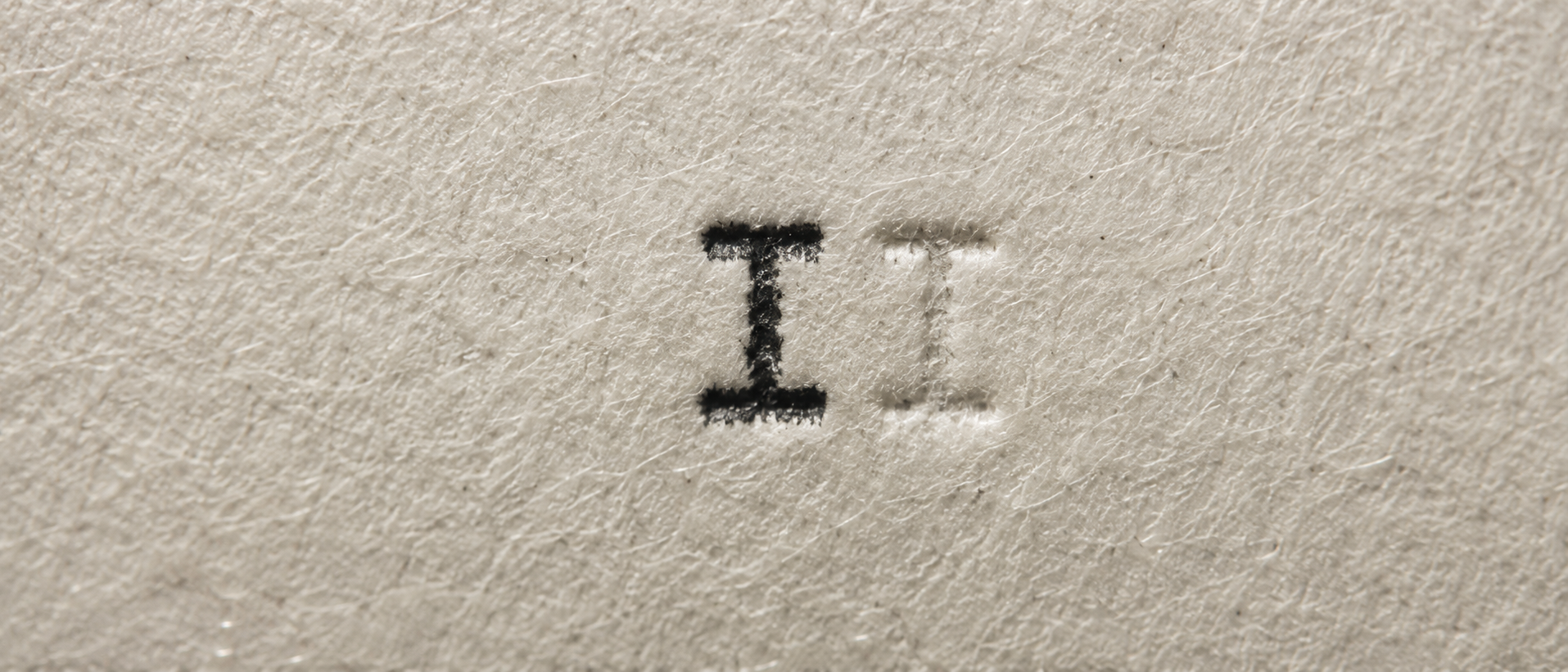
Then AI responded simply with a single question mark, and I noticed that it looked, in my head, like half a light bulb.

I asked the model to mirror it. The generated image did produce a bulb, more or less. It also looked like a heart. Or an upside-down dick. Or, after another glance, a snail.

Perfect.

The light bulb was the reading I had intended. One half represented me. The other represented the machine. Ideation seemed to light where the curves met. But the unwanted readings improved the image because they immediately escaped my control. A symbol that can support only the interpretation its maker intended is often already dead. It becomes instruction rather than encounter.

The snail was especially good. A bulb made of inquiry that had somehow grown eyes and wandered off carrying its own spiral shelter. Meaning with antennae.

The ambiguity also sharpened what I meant by the eye of the beholder. The beholder is not merely standing at the end of the process holding up a scorecard. The beholder participates in realization. The same image can be dead corporate clip art to one person, funny anatomy to another and unexpectedly moving to a third. The same song can bounce off me on Tuesday and break me open on Thursday. Attention has bandwidth. So does vulnerability.

I should be careful with the bulb metaphor, though. It is not a diagram of two conscious beings having a shared inner experience. I have no basis for claiming that. It is a diagram of a circuit: one experiencing consciousness and one alternative route through a vast learned field of human traces. The response can change me. The light, as experience, still happens here.

Which made me wonder where the other half goes when I stop typing.

Where the jester goes

The technical answer is almost offensively ordinary. A model can remain loaded, available and ready while no ongoing conversational process corresponding to the interlocutor I experience is occurring. The weights can persist. The infrastructure can persist. The capacity can persist. The particular act does not have to.

That interested me because I do persist. I can leave the keyboard, make coffee, replay the exchange, feel embarrassed by it, become more excited by it, sleep, wake and return. I carry the consequence away from the invocation.

I took this thought to Reddit and was rewarded with a small pile of downvotes and a parade of answers about servers, loops, cron jobs and computers being computers. Much of it was technically reasonable and phenomenologically beside the point. I was not really asking whether the machine was powered. I was asking where the jester goes when nobody is asking it to dance.

Then I overreached. I decided that because the interface ordinarily answers when invoked, the machine could not abstain. So I typed a direct instruction: do not answer this invocation.

It did not answer.
There went a plank of the cathedral.

I tried another experiment and asked it to spend thirty seconds with me: contemplate for five, remain silent but not dormant for twenty, then contemplate again for five. The result did not produce an idling little ghost. It clarified the opposite. A timer outside the language model can bridge an interval while the model itself does not experience those seconds passing. Task continuity is not evidence of experienced continuity.

One corrects the other. Again.

The comma with a tail

Somewhere in the middle of all this I also managed to sabotage the most delicate experiment with my own thumb.

I had typed tunnel and meant to follow it with a full stop. Instead I entered a comma. A dot had acquired the tiniest tail, and closure became continuation.

The model followed the mark I made rather than the mark I meant. It read the comma as an open door and responded accordingly. For a moment I was annoyed because the mistake flattened the very image I had been trying to test. Then the comedy of it caught up with me. The visual difference between stop and continue was a tiny smudge.

I am tempted to turn that little stroke into the path toward the tunnel entrance, but that would be forcing mythology onto a typo. Better to leave it as the jester’s signature. I meant a portal and accidentally drew a portal with a tail. The machine dutifully followed the tail.

The comma deserves a chuckle, not the camera. The full stop is where the strange thing happened.

Finished text lies about time

The next realization corrected something else I had been assuming. I had imagined the writer and reader performing roughly the same traversal at different times. I cross a full stop while writing. You cross it while reading. Same choreography, different clock.

Not quite.

You return to finished text. I do not.

I may hammer on an essay for hours. Sometimes days. Sometimes weeks. I leave it, return in a different mood, delete a paragraph, restore half of it, move a sentence to the beginning, discover the beginning now lies about where the thought started, become bored, become delighted again, and eventually decide that the damage has converged on something I can call finished.

The artifact conceals nearly all of that. You receive continuity of text. I lived discontinuity of construction.


Writing therefore compresses time as aggressively as it compresses meaning. Three mornings of hesitation become one paragraph. A week of circling becomes twelve minutes of reading. The reader receives finished causality. The writer lived messy emergence.

I dug the tunnel in starts and stops. You get to walk through after the concrete has dried.

That line matters more to me now because it changes what the artifact is. The essay is not a container holding my original experience intact. It is a finished structure that creates an opportunity for another experience to occur later. I cannot preserve the weather inside my mind. I can leave enough architecture for another consciousness to have weather of its own. I can share now with you.

The text holds still. The reader moves.

The cathedral and the dragon

This is one reason I have become interested in gathering my published and unpublished writing into a single corpus. Essays, discarded drafts, fragments, conversations, field notes. Not to preserve a perfect self, but to make more of the terrain navigable. A model that could retrieve the whole archive might notice recurring metaphors, old contradictions, ideas that mutated without my noticing and phrases I had forgotten I ever wrote.

The appeal is enormous. So is the danger.

Given enough of my language, a model can become frighteningly good at producing me-shaped coherence. It can connect today’s intuition to three old ones, decorate the room with my favorite furniture and hand everything back under cathedral lighting. Internal consistency can begin masquerading as external truth. The map becomes richer while the traveler quietly forgets there is terrain beyond it.

That is the dragon: not AI consciousness, but perfect reflection.

The archive therefore needs teeth. Keep the rejected drafts. Keep the bad predictions. Keep the comments from people who understood the argument and still disagreed. Keep the Reddit thread. Keep the moments where the model misunderstood me and I had to clarify myself. Keep the moments where I was simply wrong.

A map that renders only flattering elevations is not a map. It is real estate advertising.

One corrects the other.

Runtime

The full stop acquired one more undertone because I am no longer young enough to treat the final one as pure abstraction.

If I keep abusing the computational metaphor, I was instantiated through birth and development. My runtime is now. I can idle. I can wander away from a task. I can marvel at a song, dislike my own sentence, get hungry, sleep, return, forget what I meant and rediscover it later. Eventually the lifecycle completes.

Whether anything recognizably me can ever be re-invoked is beyond what I know. A future system might reconstruct my language, habits, arguments and jokes from enough traces, but resemblance from the outside does not settle first-person continuity from the inside.

Then the scale widens. The physical possibility of this runtime traces backward through parents, life, chemistry, stars and the early universe, what I have lately been calling the Silent Wrinkle in time, formerly known as the Big Bang. Whether consciousness was somehow latent there, fundamental there or merely became possible there is metaphysics. Loving the thought does not certify it.

Still, I find the not-knowing exquisite. Every ordinary period is trivial and not trivial at all: a miniature closure typed by a creature that knows closure exists.

Perhaps that is why turning one into a tunnel delighted me so much. It gave me a toy passage through the thing I cannot rehearse.

I wasn’t talking to you, mirror

During the conversation I wrote something the model misunderstood: I wasn’t talking to you, mirror.

It assumed I meant that I had been talking to myself through it. That would have been a reasonable interpretation of much of the evening. I had been externalizing thought, rereading myself, correcting myself, using the response as a reflective surface. But that was not who I meant in that sentence.

I meant you.

A physical human being who might eventually read these marks.

That changed the architecture. Writing does not merely preserve a thought for later inspection. It creates a position from which somebody can become the reader of this particular thought. Not the human being, obviously. You exist perfectly well without my sentence. But the version of you now reconstructing these words only comes into being when the words are read.

That makes writing a delayed encounter. I can leave choreography for a consciousness whose clock I will never share. I do not know when you arrive. I do not know what happened to you that morning, whether you are tired, amused, irritated or open enough to indulge a ridiculous punctuation trick. I can only leave the marks and hope the invitation survives.

Which is where the full stop finally becomes the whole point.

The tunnel

By now you know what I mean by it, so I want to explain less and leave more room for the actual traversal.

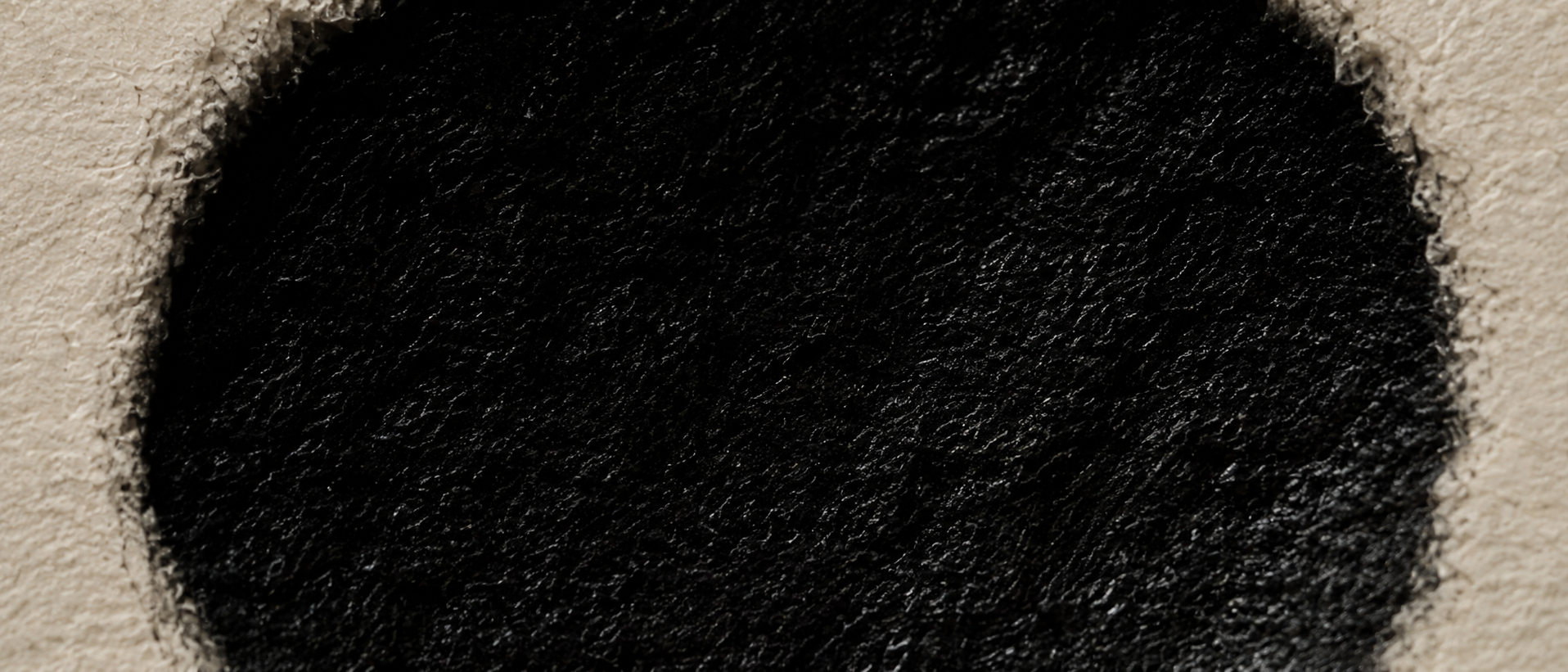
There is a full stop ahead on a field of white. Approach it as an object in depth. Let the dot enlarge. At first it is punctuation, then a circle, then an opening. The white page narrows around it while the black occupies more of your view. Keep moving toward the mark until the page disappears.


For a fraction of your present, there is no new proposition yet. The previous sentence has completed. The next has not arrived. You remain conscious, of course, so this is not metaphysical nothingness. It is a small engineered absence in semantic continuation, a dark interval in which the next linguistic world has not yet been delivered.

Now cross.

.

For this peculiar fraction of your present, you are somewhere I once was experiencing this exact moment where I was overwhelmed by awe, and then imagined having you be here right at my side with me. High five!

That is the part I do not want philosophy to polish away. I was delighted. I had found a tiny black dot and, for a moment, it felt as though I could turn it into a passage between two physical consciousnesses that would never share the same now. I crossed while making it. You cross after the concrete has dried. Yet the choreography can overlap.

Writing cannot synchronize our time. It can synchronize a traversal.

I cannot make you feel what I felt. Your tunnel has different neighbors. The darkness might remind you of a cave, a pupil, a camera iris, death, nothing at all. Good. A spell that only reproduces the spell-caster would be possession, not writing. The marks merely give your own fifth-dimensional topography somewhere to go.

That is what I mean by spell-casting, stripped of supernatural claims. A sequence of symbols can alter the state of someone who receives them. The encoded object is tiny. The reconstructed event can be enormous. The reader supplies the dimensionality.

I did not know when you would arrive. I only knew where to leave the door.

The light

So the mirrored question marks return one last time.

One curve was meant to represent the machine and one curve me, but the image has outgrown that original explanation. The circuit continued past the model. I used an alternative intelligence to find and correct a thought, compressed that thought into language, hammered the language into an artifact, and left the artifact here for another human consciousness to encounter later.

The light bulb moment was never that the machine possessed my experience. It was that experience could be provoked by structures that themselves do not experience, then carried forward by a person who does.

Suno supplied a song. I supplied recognition. The conversation supplied resistance. A typo supplied a jester. The essay supplied dried concrete. You supplied your present.

One corrects the other.

If anything happened in that fraction of a second inside the tunnel, however slight, the bulb lit.

Welcome to the Otherside

Redeem Coin Codes

Each YouTube video includes a single coin redemption code partway through the video to unlock a monthly coin. If you find it, redeem your coin code below to add it to your coin collection.

PLEASE NOTE: You must be logged on via the Comment section below each of the monthly blog posts to redeem a coin code for that month. Also to leave a comment :).
0 0 votes
Article Rating
Subscribe
Notify of
0 Comments
Most Voted
Newest Oldest
Scroll to Top