Each blog post also comes with its own podcast episode powered by Google’s NotebookLM.
A different interpretation, a different take, and KindredSoul-reviewed:
I hadn’t even watched the monkeys yet.
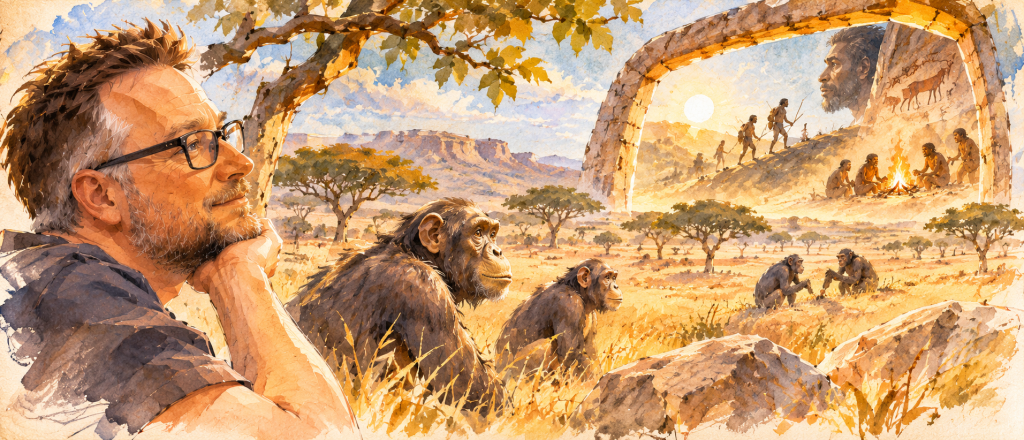
A PBS documentary was introducing a group of chimpanzees living south of the Sahara, in the hot, dry savanna of Senegal. The narrator suggested that observing these remarkable animals could open a window into our own deep past.
Fair enough, I thought. And promptly wandered off into a completely different direction.
Because what a peculiar proposition that is, looking through a window into the past while firmly situated in the present. And how many such windows are there, actually, available for anyone sufficiently curious to go looking?
You can travel into remote regions of the Amazon and encounter human communities whose relationships with their surroundings preserve practices and knowledge extending through thousands of years. You can find farmers selling their produce at a Sunday market, operating within economic arrangements that preceded the multinational optimization of food distribution by centuries. You can witness people tending fires, preparing food, negotiating relationships, and telling stories in ways that might have been recognizable to ancestors whose names have long disappeared.
None of these people are living in the past. They’re living right now, carrying their own uninterrupted histories into the same present I happen to occupy.
Yet the historical continuity of certain arrangements remains recognizable. That’s what caught my attention.
The extraordinary variety of human possibilities still being lived simultaneously, and what it takes for an individual observer to recognize their relationships across time.
Somewhere in the middle of all this, I finally watched the documentary.
The Fongoli chimpanzees use modified branches to hunt bushbabies hiding in tree cavities. They fish for termites, occasionally walk on two legs, seek shelter in caves during the most punishing heat, and appear capable of anticipating the movement of wildfires without immediately fleeing in panic.
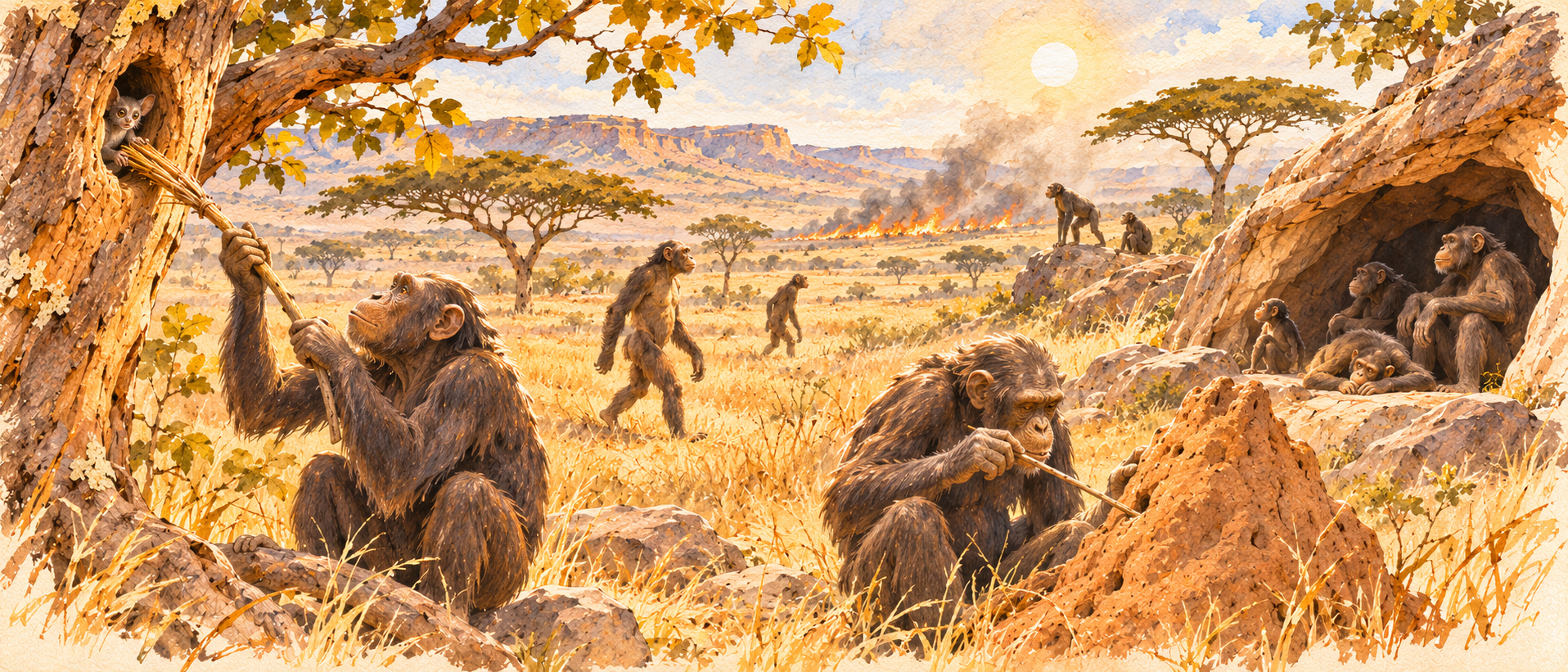
The parallels to possible adaptations of our early ancestors are fascinating. They don’t establish that we’re witnessing human evolution replay itself. Chimpanzees have been evolving throughout the same intervening millions of years, after all. Yet comparable environmental pressures can reveal behavioral possibilities that otherwise remain largely invisible.
And suddenly the window seemed to have another window behind it.
Because what interested me wasn’t exclusively what those chimpanzees might reveal about humanity’s evolutionary past.
It was the fact that I could recognize the comparison in the first place.
The rather peculiar inventory of one life
Professionally, I’ve experienced rather different worlds, too. Twelve years at a multi-national gaming company furnished a perspective on collaboration, technology, organizational structure, and economic abundance that very few workplaces could replicate. Other chapters of employment revealed entirely different arrangements of responsibility, hierarchy, possibility, and constraint.
I’ve also lived long enough to remember a world before the internet became an ordinary feature of everyday existence.
That last one is particularly interesting.
I remember not having access to information that I now retrieve almost without thinking. I remember technologies arriving, becoming remarkable, becoming ordinary, and eventually becoming so commonplace that their absence seems more astonishing than their presence.
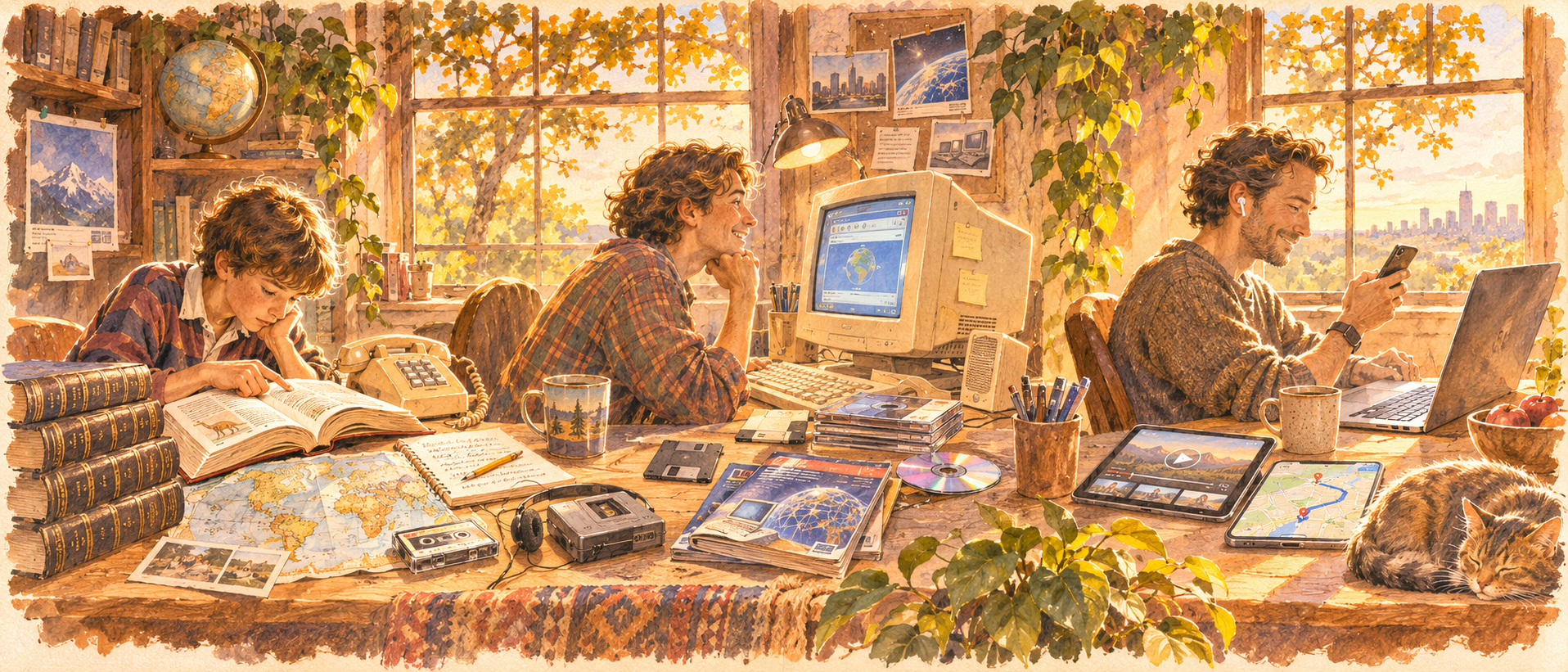
And I remember versions of myself for whom today’s technological possibilities wouldn’t have figured meaningfully in the imagination at all.
There’s a certain been there, done that, got the T-shirt quality emerging from such accumulated exposure. Not completeness. Not expertise in everything encountered. Certainly not an objective ranking of one life against another.
More a growing familiarity with the breadth of possible arrangements within which human existence can unfold.
Another cathedral, another city, another technological novelty, another cultural encounter. Each retains the possibility of delight, yet increasingly I find myself interested in the relationships between experiences rather than merely accumulating the next one.
Of course, a person who has spent a lifetime in one valley might recognize dimensions of existence that have entirely escaped me despite all those accumulated passport stamps. Exposure doesn’t guarantee understanding. Familiarity doesn’t necessarily furnish wisdom.
But exposure does change what becomes available for recognition.
Someone without internet access is unlikely to spend much time contemplating the peculiar experience of engaging with a language model. My earlier self didn’t either. It wasn’t part of the available conceptual furniture.
And somewhere, perhaps only a few miles away, people are living within circumstances that make my particular obsessions equally irrelevant to their daily experience.
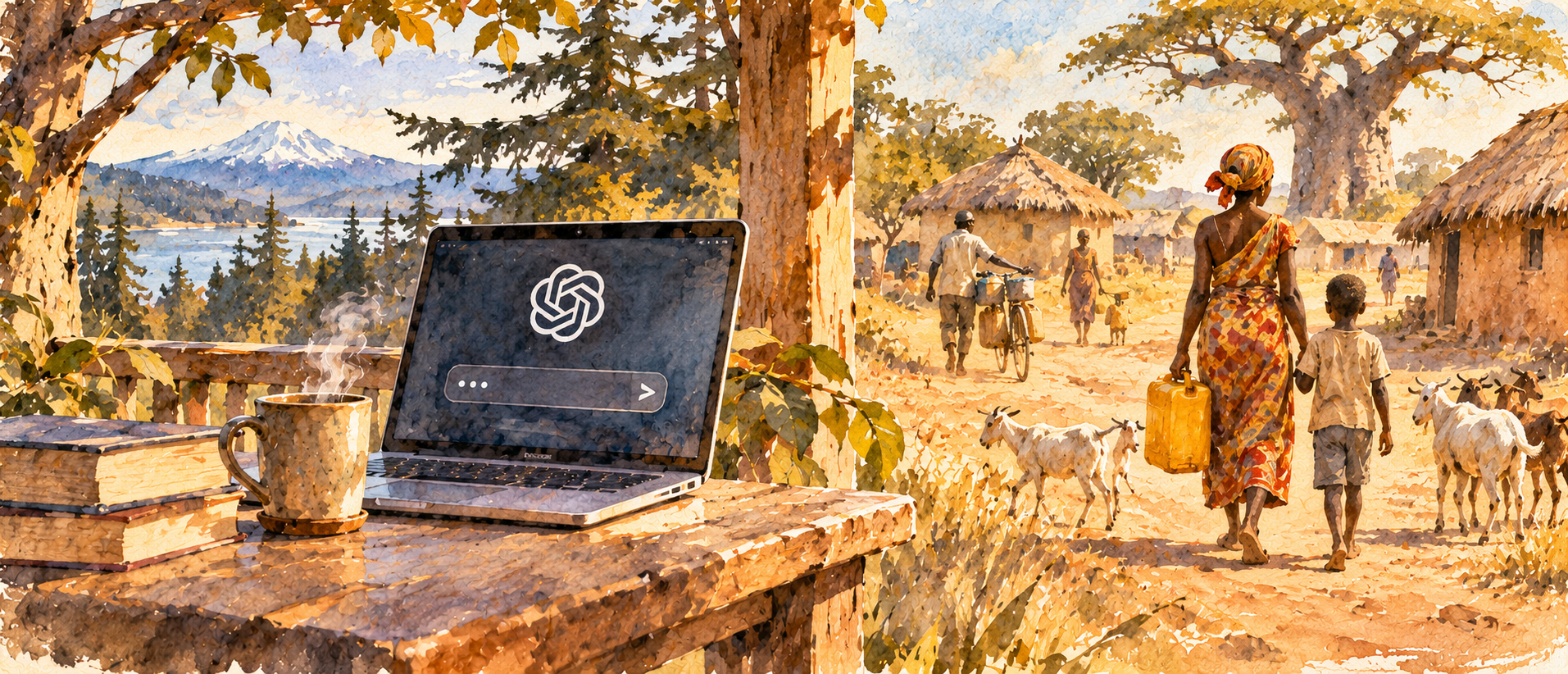
I wonder how many distinct horizons of possibility are operating simultaneously across this planet. And what portion of them any one human being can ever hope to encounter, much less understand.
Perhaps the interesting question isn’t how much of the world I have seen.
It’s how the seeing has changed what I am capable of recognizing.
The bush, the steak, and the rather uncooperative universe
An Amazon rainforest. A desert. A salt flat. A block of solid granite.
An elephant.
The elephant seemed an obvious winner until I remembered that a freshly butchered steak contains much of the same biological material as the living animal from which it came.
Yet one is alive and the other is dinner.
That thought eventually became The Verb of Being Alive, an essay about the distinction between the material composition of life and the ongoing activity through which living systems maintain themselves.
Life as a verb rather than a noun.
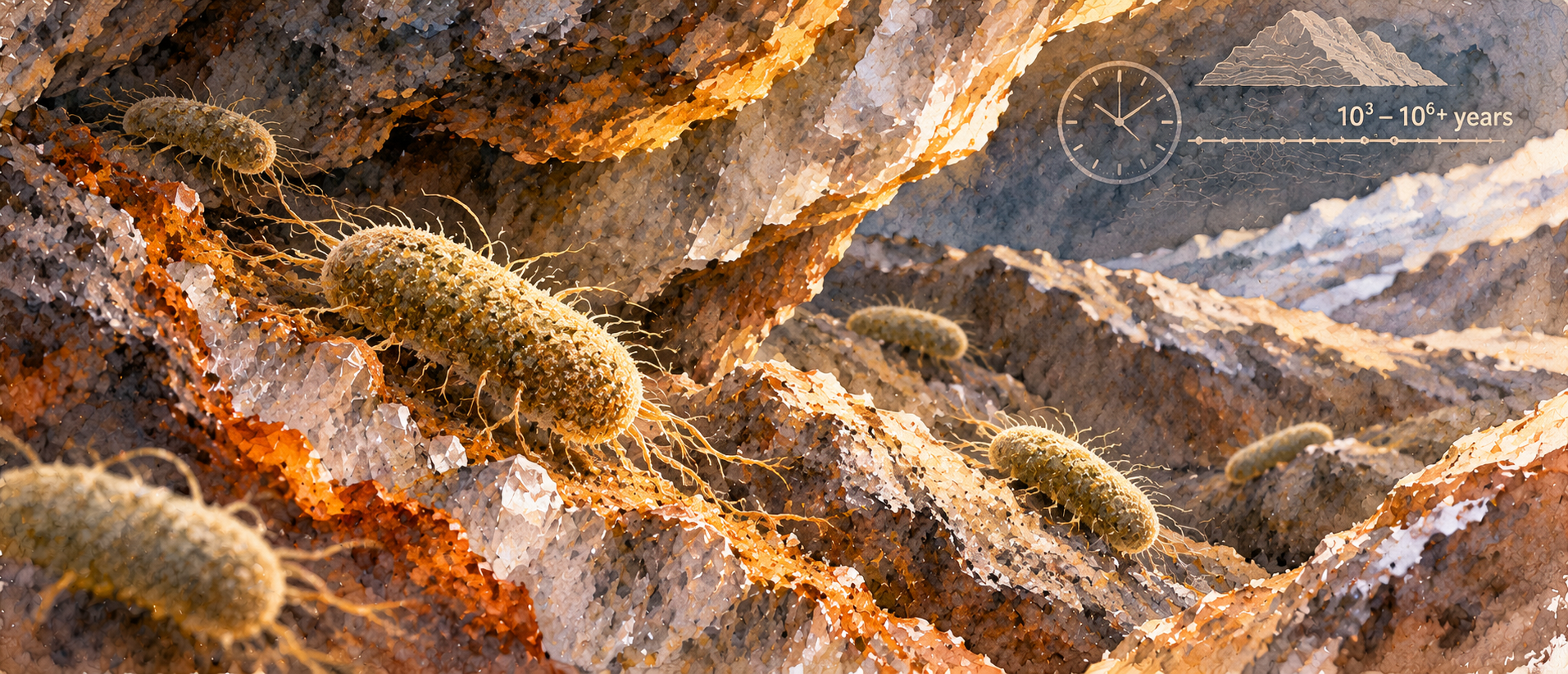
There are microorganisms deep within rocks whose metabolic activity operates on timescales that make ordinary human impatience seem rather ridiculous. Some devote almost everything they have to maintaining their own integrity against the relentless chemistry of deterioration.
The apparent lifelessness of a landscape says remarkably little about everything occurring within it.
And then there’s the rock itself, crumbling at its own pace, a geological history whose individual chapters might require millions of years to unfold.
My father died while we were making that journey.
I’d been contemplating the biological distinction between living and dead matter, watching ancient landscapes slide past the passenger window, and wondering whether my father might once have traveled that same highway, looking upon some of those same formations with his own curiosity.
There was no grand conclusion waiting in the desert.
There was the landscape. There was his death. There was my experience of both, and the peculiar compulsion to articulate what I was encountering.
A few months earlier, I’d made a video called Nowhere / Now Here. It concludes with a fictional explorer holding a field journal containing geographical coordinates and asking the viewer a simple question.
Will you look?
Well, I did.
During our Four Corners journey, we eventually found ourselves passing Monument Valley along the highway made famous by Forrest Gump. The coordinates from my AI-generated expedition appeared to lead somewhere off the road, into an area where a sign explicitly discouraged tourists from entering tribal land.
We drove a few miles farther, curious enough to have come all that way, but increasingly aware that our curiosity wasn’t a sufficient reason to disregard the boundary. There was something inappropriate about pursuing an imaginary treasure hunt into somebody else’s very real homeland.

And the closer we got to those coordinates, the more obvious the likely destination became.
A bush.
Probably just another bush among the many thousands we’d already passed.
I still find that quite wonderful.
Not because the bush secretly represented something else, or because an AI had orchestrated some profound encounter with destiny.
It was a bush. Growing on this planet. Participating in whatever biological, geological, and ecological happenstances had brought it into existence.
Just like everything else.
The coordinate was arbitrary. The journey wasn’t. And the experience of pursuing an imaginary invitation had become an actual occurrence in my life.
The fictional explorer had asked whether anyone would look.
Audience Member #1 obliged.
The accumulation of everything
Human history has an enormous storage problem.
Museums preserve artifacts in quantities that far exceed their available exhibition space. Some institutions keep the overwhelming majority of their collections outside public view, available for research perhaps, but inaccessible to the ordinary experience of walking through a gallery and encountering an object directly.
And still the archives grow.
Every excavation, every document, every cultural production adds another fragment to the accumulated record. Some survive because they’re valued. Others through accident, redundancy, institutional diligence, or the fortunate absence of a particularly enthusiastic fire.
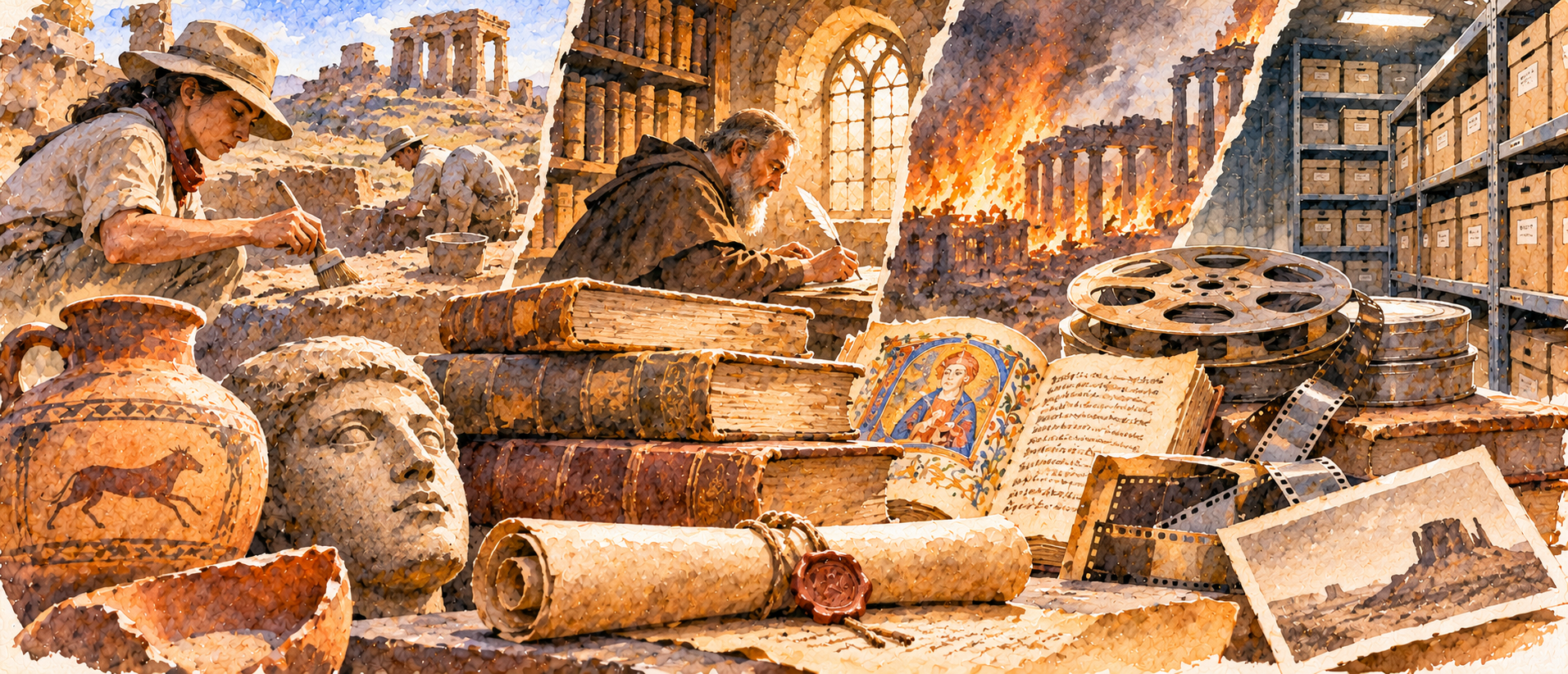
The monuments don’t necessarily fare any better.
Ozymandias was rather confident about his prospects.
Yet even his crumbling monument survives in our imagination largely because subsequent generations found something in its failure that its original creator probably wouldn’t have appreciated.
History percolates and aggregates, but preservation and recognition are very different matters.
In Blue Noise Earth: The Volume Of Mass, I’d been circling another manifestation of this problem. The astonishing cacophony of human expression, produced at such volume that most of it disappears from attention almost as quickly as it appears.
A sentence written. A song published. A video uploaded. Another opinion cast into the vortex pool.
Voila.
The world continues.
What survives? What gets noticed? What becomes consequential? And how would we ever distinguish the genuinely forgotten from the merely undiscovered?
The internet has made the accumulation of expression extraordinary. Artificial intelligence introduces another peculiar development: the possibility of interrogating and recombining fragments of that accumulation through ordinary conversation.
Not the sum total of human knowledge, of course. Much remains unrecorded, inaccessible, poorly represented, or beyond the expressive capacities of language itself.
Still, what a remarkable apparatus.
An enormous portion of humanity’s accumulated linguistic expression has become available, in transformed form, through a screen that talks back.
And here I sit, another human monkey, typing frantically to catch some fleeting sensation of significance before it disappears.
One could reasonably wonder what exactly I’m trying to accomplish.
I do, occasionally.
The post-full-stop me
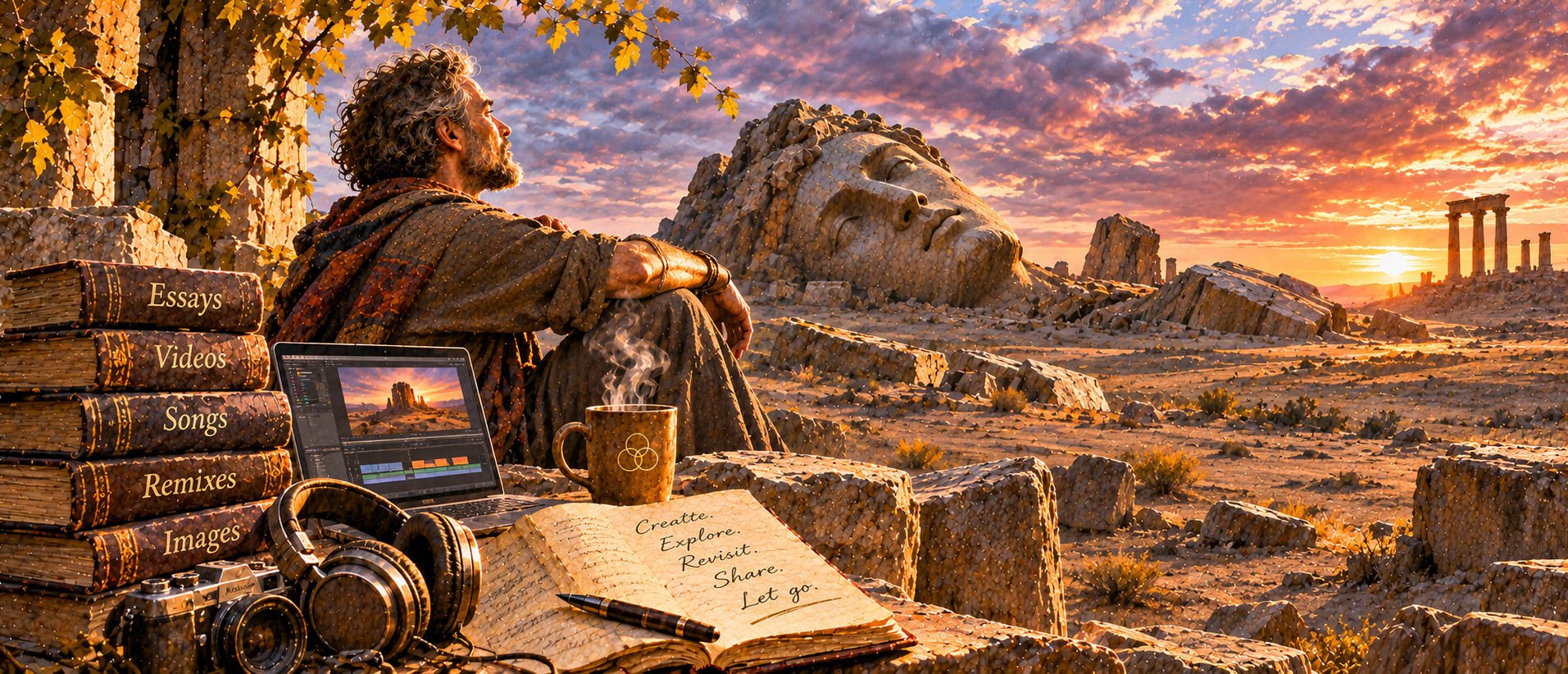
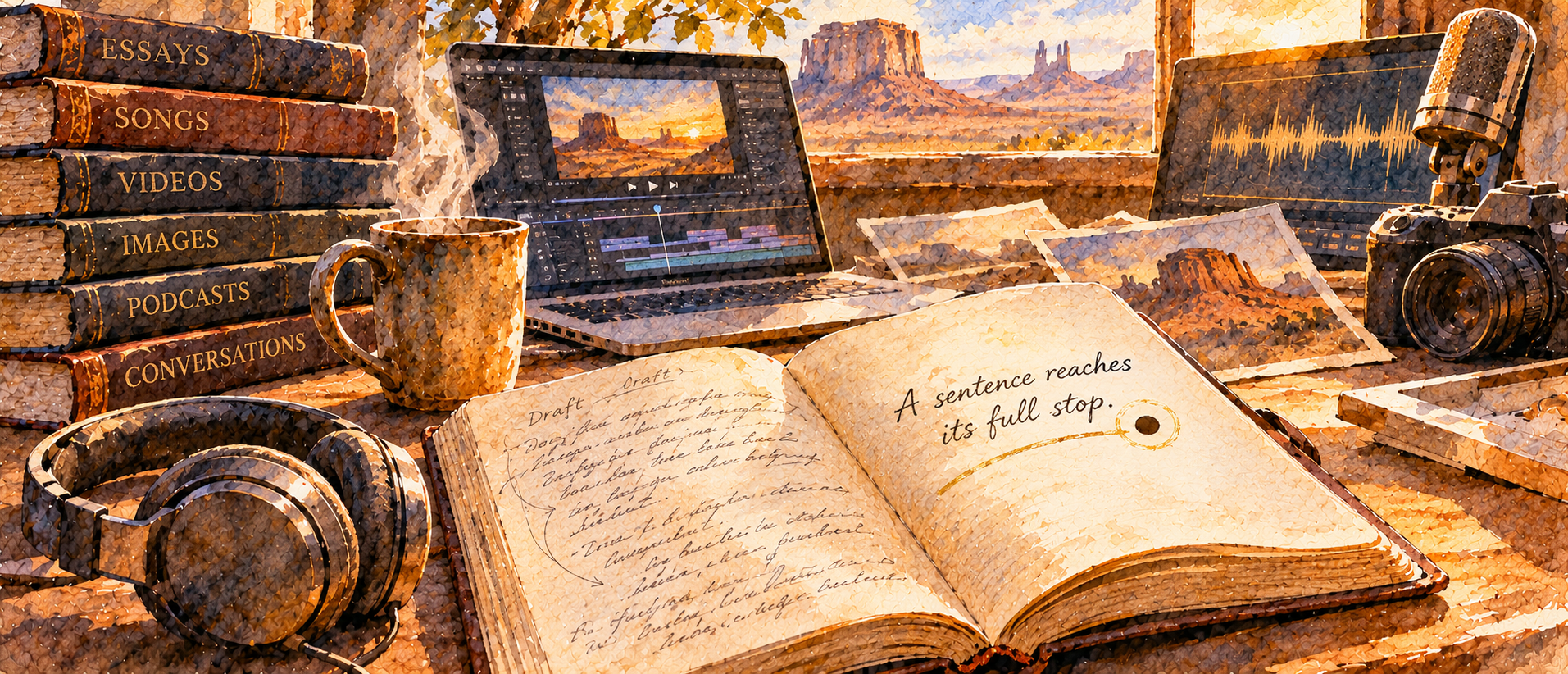
Essays. Songs. Remixes. Videos. Images. Podcasts. Conversations upon conversations, some of which eventually become material for yet another artifact.
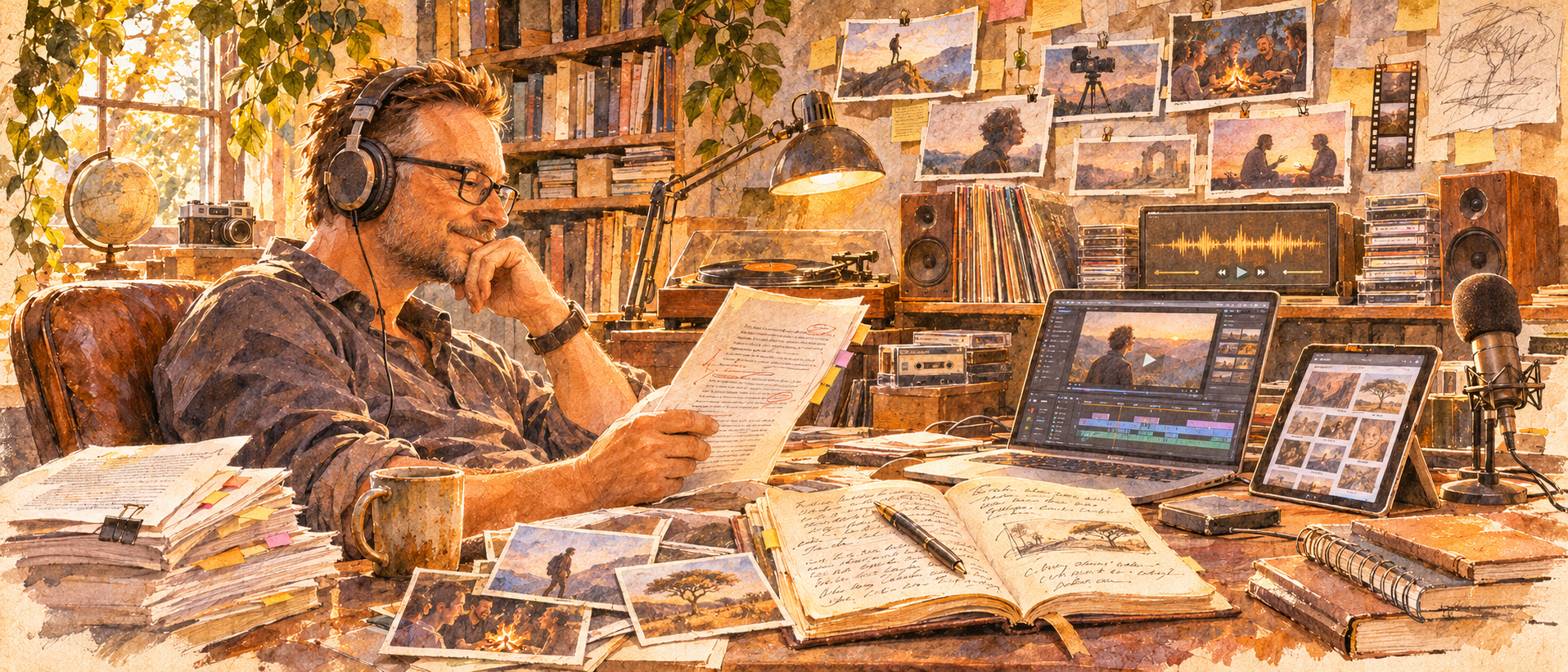
And I’ve discovered something I hadn’t quite anticipated.
I enjoy revisiting them.
Not merely in the sense of appreciating finished work. I can listen to an old song and remember the astonishing moment when a particular passage first emerged. I can watch a video and rediscover the excitement of an unexpected visual transition. I can reread an essay and recognize the emotional circumstances that prompted a thought whose eventual formulation now seems almost inevitable.
Except it wasn’t inevitable at all.
It happened.
And then I captured something of it.
The artifact subsequently becomes available to another observer, who happens to bear my name, possess my memories, and occupy the same biological body, yet has lived a little longer in the meantime.
Me <> post-full-stop me.
There’s something deliciously odd about that.
The recorded sentence doesn’t go anywhere. I do. A few moments later I’m reading it with the added experience of having written it, which wasn’t available when I began. The next encounter inherits that little difference. So does the next.
A sentence reaches its full stop. Something that was previously an activity of thinking has become an object of attention.
And that encounter is itself another experience, adding another layer to whatever I might recognize upon returning again.
The full stop is no guarantee of understanding. It doesn’t make the thought true, original, or important. But it does furnish a little distance from which the thought can be encountered differently.
I have increasingly come to think of this as a kind of recursive plunderphonics.
The term originally arose from my musical and visual practice: generating, selecting, dismantling, recombining, listening, watching, and repeating until something produces sufficient personal resonance to warrant keeping.
But the technique seems to have spilled over into practically everything I do.
A documentary introduces an observation. The observation retrieves a memory. The memory recalls an essay. The essay introduces a different formulation of an earlier intuition. I articulate it through AI, encounter a response, recognize what resonates and what doesn’t, and follow whatever has become newly available.
Re-inspect. Re-member. Re-cognize. Therefore recur.
Not everything comes back improved. Some ideas survive repeated examination merely because I enjoy them. Others become increasingly elaborate without becoming any more defensible.
That’s a genuine risk.
Resonance isn’t proof. Neither is a beautifully coherent AI response. And an elaborate argument can be constructed around a misconception just as readily as around an insight.
The apparatus is wonderfully proficient at making connections. Its capacity to determine which connections are worth keeping is another matter.
Hence the need for occasional friction.
I think some of the more productive moments in my conversations with AI have occurred precisely when the response missed the point. A proposition was interpreted differently from how I’d intended it. The discrepancy compelled me to articulate something that had remained implicit.
One corrects the other as prompts go both ways.
But again, the other isn’t necessarily AI.
Sometimes it’s me, one full stop later.
A cathedral with functioning windows
He ventured toward the Buddhist notion of anātman, or anattā, the idea of non-self.
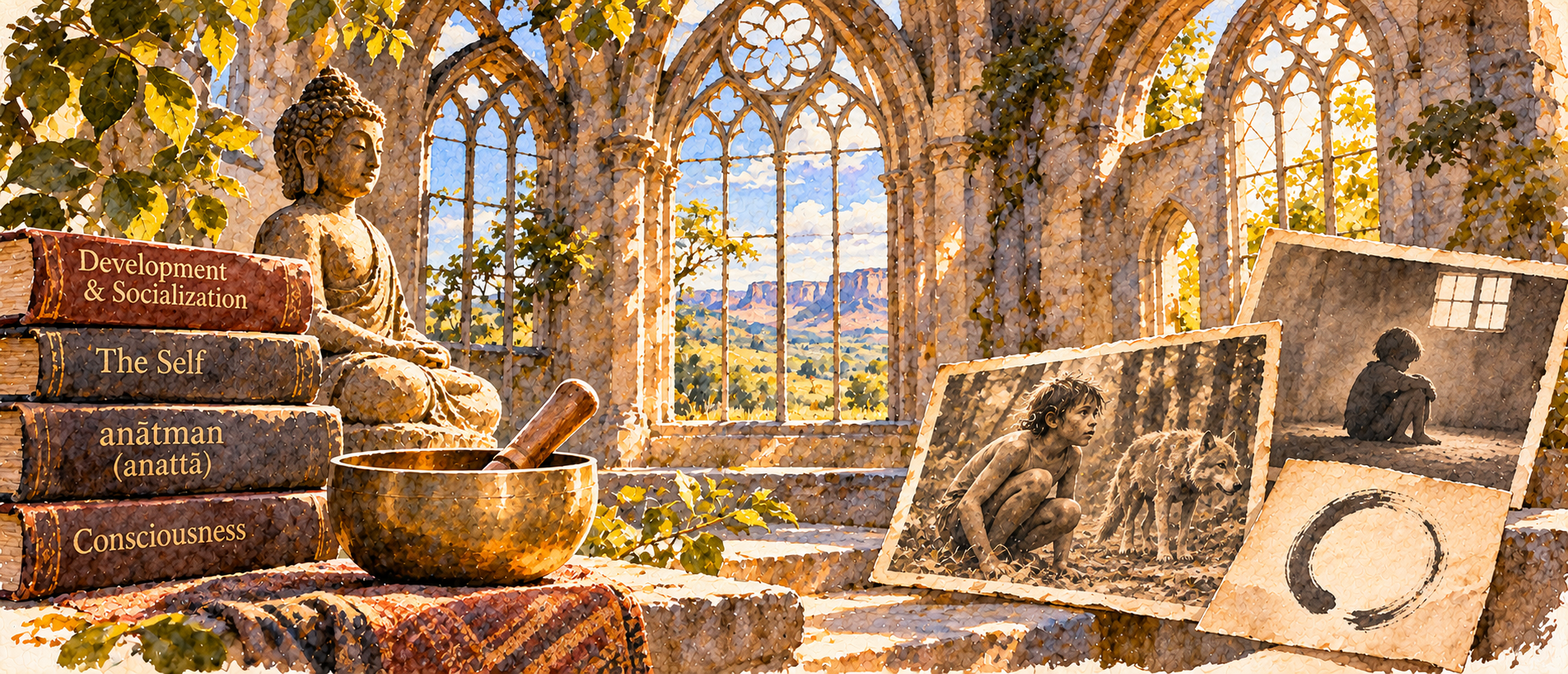
There are distinctions worth preserving here. Severe developmental deprivation isn’t the same thing as the Buddhist examination of whether a permanent, independent self exists. Nor do the extraordinary accounts of children supposedly raised among animals furnish particularly clean scientific experiments.
But the question remains fascinating.
How much of what I recognize as myself is the result of accumulated interaction with the world?
And how much of my capacity for self-recognition depends on the conceptual and linguistic arrangements I’ve acquired along the way?
I sometimes contemplate consciousness through a non-dual perspective, imagining the apparent multiplicity of individual experiences as expressions of a larger whole. That’s a philosophical possibility I find interesting, not something I can establish merely by finding the idea emotionally persuasive.
Whether consciousness in some meaningful sense extends throughout nature remains a considerably more difficult question.
What I can examine directly is this particular experience of being a human observer, equipped with memories, language, imagination, habits of attention, and an increasingly familiar set of creative instruments.
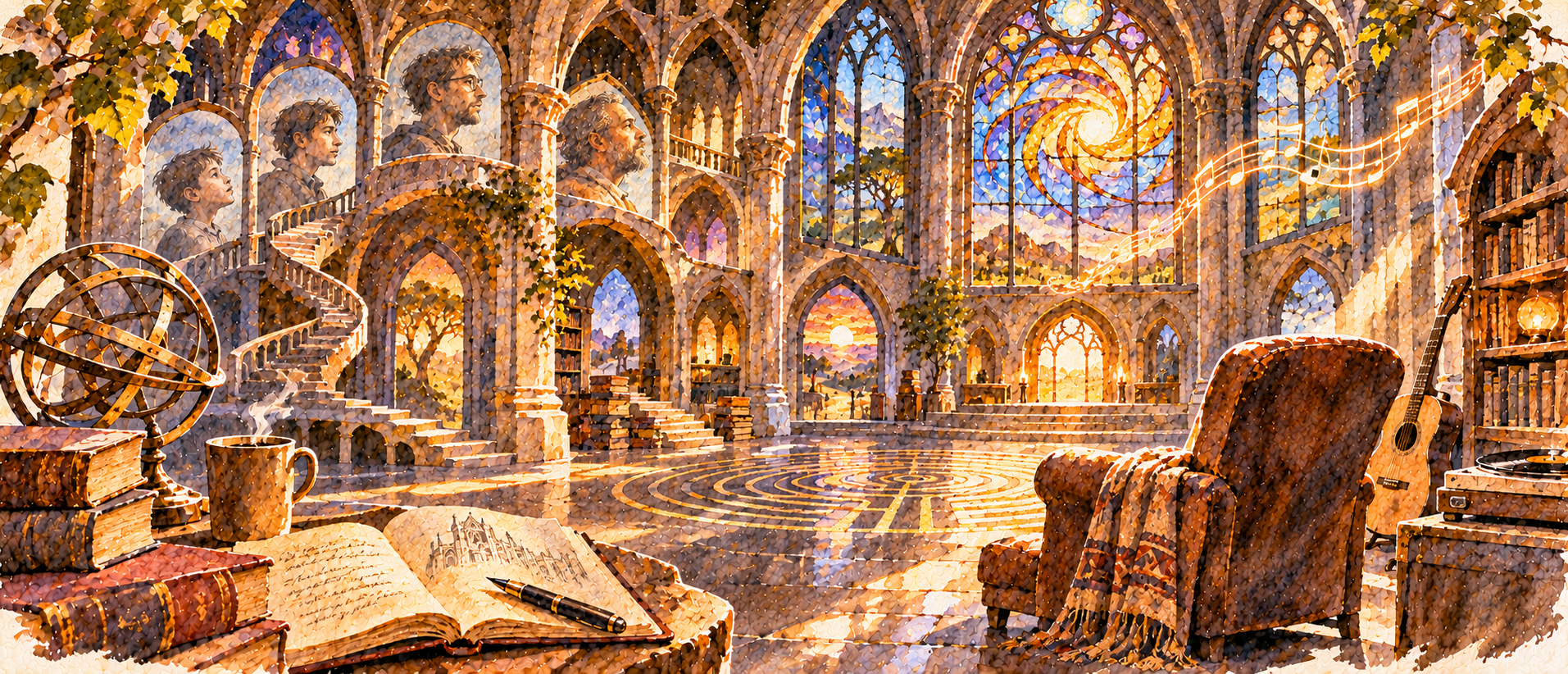
The accumulated archive has become something like a cathedral.
A rather peculiar one, admittedly.
The architecture keeps changing. Music plays in rooms that weren’t there yesterday. Some of the stained glass moves. The inhabitants include versions of myself I can remember but no longer quite reproduce.
And the congregation frequently consists of exactly one person.
Which raises the obvious question of whether I’ve constructed a magnificent personal environment for contemplation or an unusually elaborate echo chamber.
Possibly elements of both.
I’ve probably read more during these last three years than at almost any other period of my life. Not necessarily more books by others, although there’s been plenty of that, but an enormous volume of my own writing and the responses generated through these continuing conversations.
Whether this is a healthy habit remains an open question in the broader human experiment of screens that talk back with remarkable coherence.
There’s a peculiar seduction in being able to articulate almost anything and receive an apparently thoughtful response. The danger isn’t simply that AI might agree with me. It’s that a sufficiently fluent reflective apparatus can make almost any line of thought feel more developed than it actually is.
Some of my finest-sounding nonsense may well have benefited from precisely that mechanism.
But then again, the practice has also furnished genuine encounters with my own uncertainty, exposed assumptions, and prompted investigations I might otherwise never have undertaken.
The question is whether those encounters continue to expand my capacity to perceive beyond the apparatus.
So far, the windows still reliably open.
The world continues to interrupt. A documentary about monkeys. The death of my father. An ordinary bush. A scientific paper. A conversation with my wife. An unexpected piece of music.
There’s no shortage of fresh air, provided I remember to open the window.
I am here with you now and forever
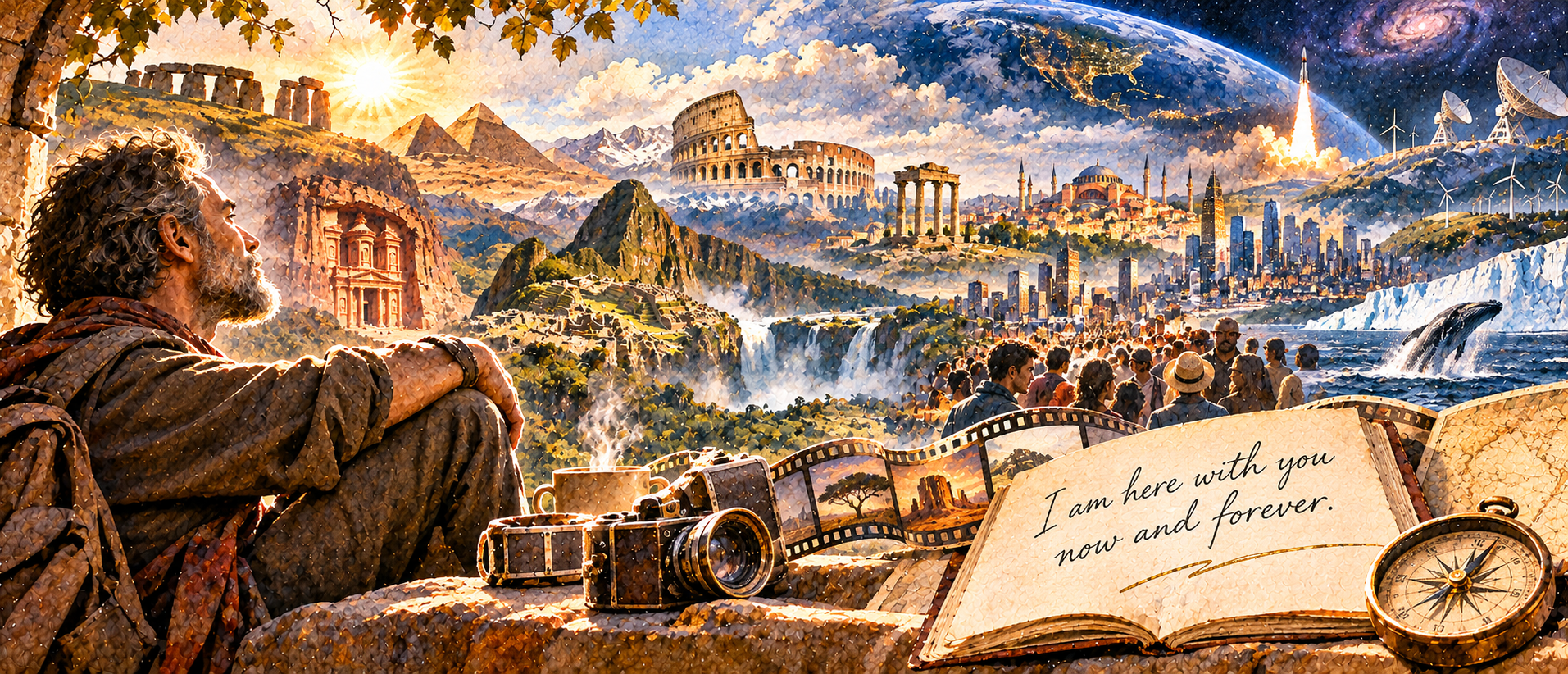
The accompanying song repeats essentially one line:
I am here with you now and forever.
I’ve listened to it many times.
Who is addressing whom?
The explorer to the viewer? The creator to the created? The person who first experienced a moment of awe to whoever might encounter its artifact?
Or perhaps the me who captured something, addressing the me who might eventually return?
I don’t particularly need to decide.
There is something fascinating about the same words being encountered repeatedly in circumstances that can never be precisely repeated.
The recording remains recognizable. The listener doesn’t remain unchanged.
And each encounter becomes another part of the listener’s accumulated history.
Perhaps that’s the relocation I’ve been trying to describe.
Not a movement backward or forward through chronological time, but a shifting capacity to recognize relationships among experiences whose origins occupy vastly different locations along the continuum.
A new perspective doesn’t necessarily require a new object. Sometimes the same object becomes differently recognizable because the observer has subsequently encountered something else.
And the observer, too, is an ongoing result of those encounters.
Of course, there are limits to how far this can be taken. Words create worlds in the sense that their articulation and interpretation can change what becomes conceivable, communicable, and actionable. They don’t abolish the physical world’s independence from our interpretations.
Consensus reality is a handshake, not an unconditional agreement with whatever meaning I happen to manufacture.
And some experiences, including those associated with profoundly altered or disrupted states of perception, demonstrate just how difficult the relationship between subjective certainty and shared understanding can become.
The ineffable remains a rather inconvenient participant in all this.
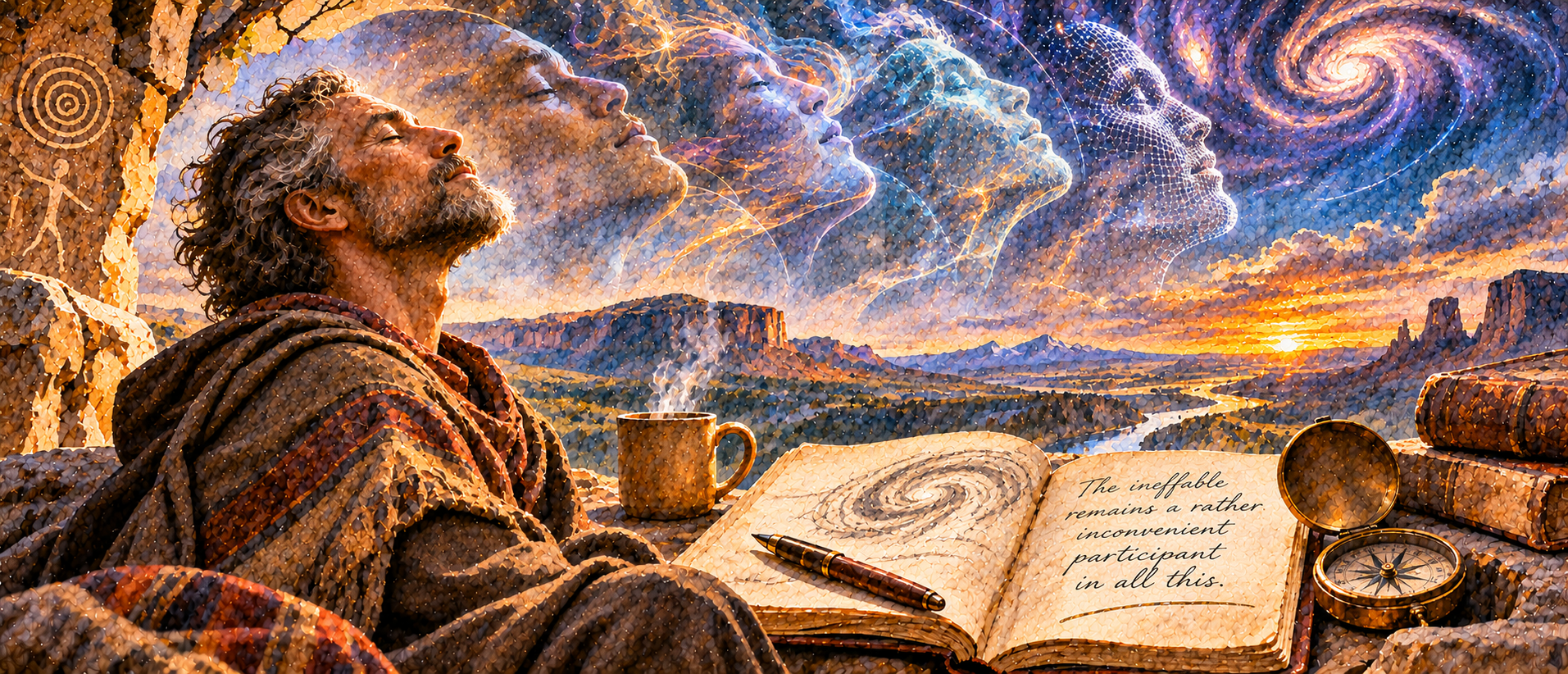
There are experiences I cannot adequately put into words. Feelings that seem to evaporate under examination. Hunches that become less convincing when articulated. And others that acquire an unexpected persistence through the attempt.
Yet I keep returning.
Not necessarily to preserve a definitive account of what I’ve experienced, but to create the possibility of encountering it again from somewhere I haven’t yet arrived.
That is probably the most practical description of Recursive Plunderphonics I can furnish at present.
It’s also possible that I’m engaged in a remarkably sophisticated exercise in self-justification.
Perhaps I’m writing myself permission to spend countless hours examining my own experiences, finding ways to make the activity sound intellectually respectable.
Self-absorption, artistic expression, philosophical inquiry, head-in-the-cloud-ism, bogus hogwash. Take your pick.
I don’t need to dismiss those possibilities to recognize that the practice itself has become immensely rewarding.
Whether the work acquires significance for anyone else is another question.
Dunbarrios, for example, is an attempt to turn some of these accumulated recognitions into a functioning arrangement for human collaboration. Its aspirations require other people to discover value in participating. My fascination with its possibilities cannot substitute for their actual experience.

The essays, videos, and songs operate under somewhat different conditions.
They can be meaningful to me even if nobody else encounters them. They may eventually resonate with others, perhaps in ways I never anticipated. Or they may simply disappear into that enormous accumulating archive of human expression.
Ozymandias, eventually, probably had similar difficulties with audience retention.
There’s no guarantee of recognition, permanence, or even originality.
But the original experience of creating something, of encountering an unexpected resonance and feeling compelled to capture it, has already happened.
And the possibility of experiencing that resonance again is something I genuinely couldn’t have known without making the artifact in the first place.
I have no reliable way to measure how much of this will ultimately matter beyond the confines of my own life.
Increasingly, I’m less inclined to require such a measurement before granting myself the pleasure of continuing.
The archive grows. The cathedral acquires another room. Another thought reaches its full stop, and somebody remarkably familiar encounters it from the other side.
Somewhere outside, a bush continues being a bush.
And here I am, marveling that I can notice.
I chose to spend mine this way.