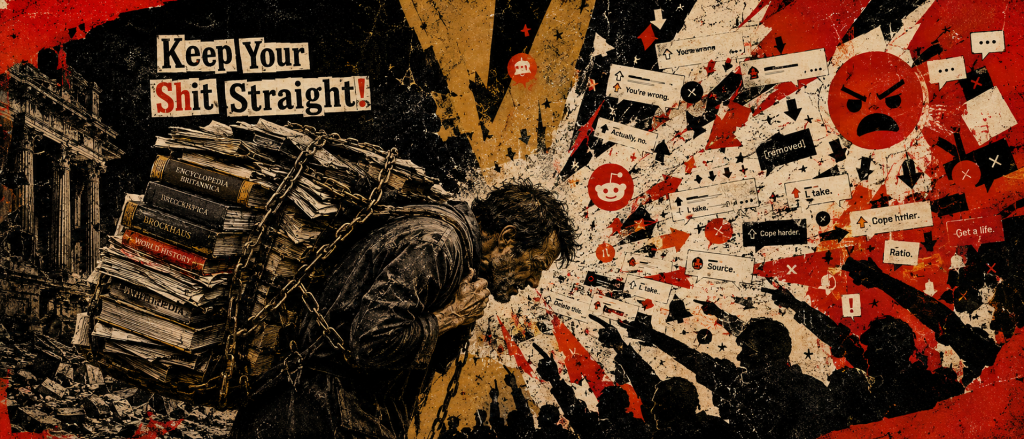
In 2001 I briefly trained to sell a printed encyclopedia in Germany. Then didn’t. Twenty-five years later a stranger tells me I’m not writing my own sentences. The below connects these two events. Complimentary ransom notes included.
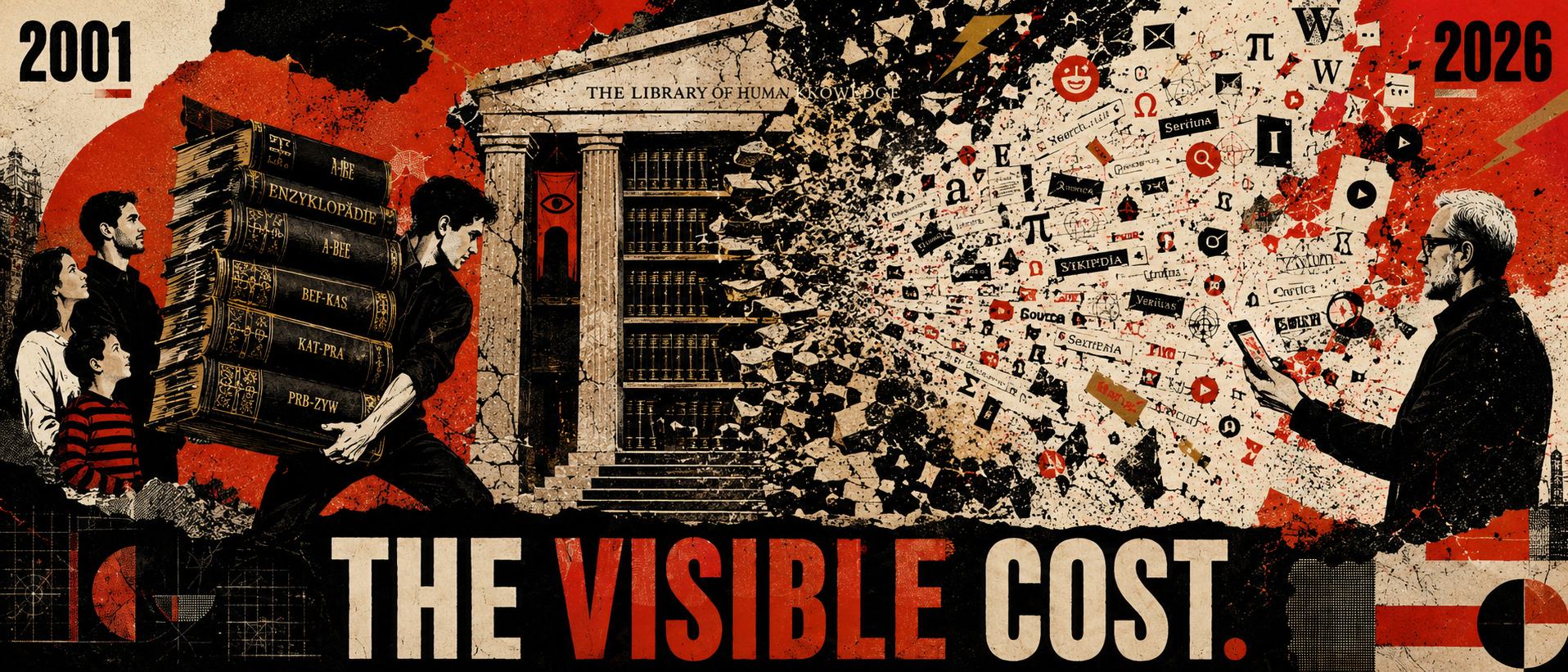
The ‘Brockhaus’ pitch, back then, was never really about the information. Everyone knew the information was in there. Reputable, just as the Encyclopedia Britannica. The pitch was about the prestige: the weight of each volume, the shelf space required for display, the visible commitment of a household that knew knowledge deserves furniture. Just as Wikipedia launched.
Four years later Brockhaus collapsed and the shelves just collected dust again.
I have been reminded about that brief period of my life because of a fight I picked on Reddit. I wasn’t truly aware I was picking one.
The setup: A certain research paper ran eight language models through 160,000 forced-choice film comparisons. All models consistently leaned to select critically acclaimed but commercially obscure films over commercially successful films that lacked the same critical standing. The effect grew with model scale inside each model family.1
I posted the paper’s link to a subreddit about AI and aesthetics because I thought it was suitably odd and interesting. The study itself was careful not to call this “taste”. It measured what came out, not what was going on inside. I indeed called it movie taste because… it’s just Reddit and not a methods appendix.
Then things became complicated.
The first objection was reasonable: perhaps acclaimed films simply have more criticism written about them, and larger models have absorbed more of it. Fair. The paper had already tried to separate visibility from evaluative signal using IMDb vote counts and, as a robustness check, Wikipedia revision counts. Coverage explained part of the scale effect in some model families, but not the whole pattern.2 I said some version of that.
Then a commenter finished their otherwise substantive response by asking me to stop using an LLM to write my comments. Nine rounds of back-and-forth followed.
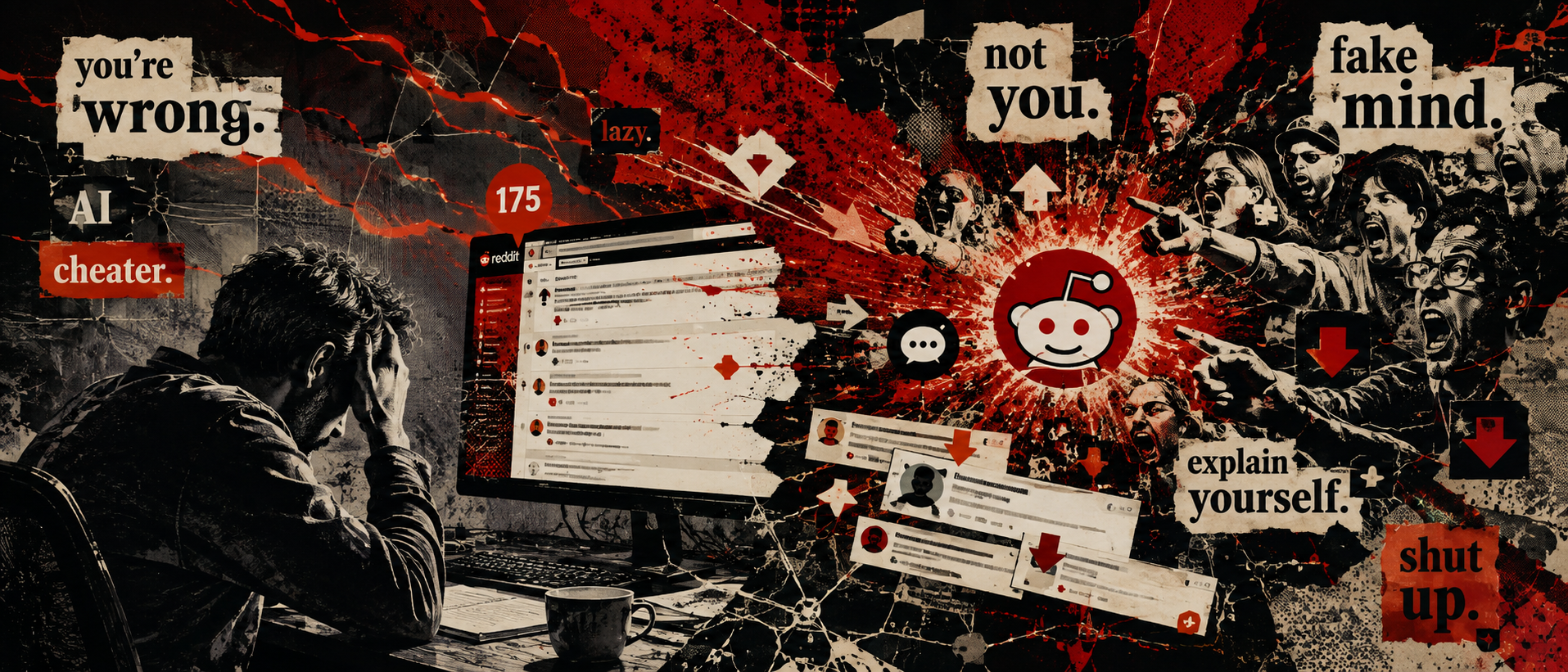
By round two it had almost nothing to do with films any longer. He argued that once a machine was involved in formulating my replies, he was no longer communicating with me. I argued that the thoughts and positions were mine, that I read what he wrote, considered it, rejected some interpretations, kept others, and stood behind what I finally posted. Neither of us moved much. That part is ordinary.
The interesting part is that I spent several days contemplating this exchange, dissecting how I thought he was wrong, and now no longer think “wrong” is a sufficient description. Awful…? Perhaps.
The store-bought sweater
Here is the strongest version of his complaint. Credits to NotebookLM:
Someone gives you a hand-knit sweater. The wool is warm, the fit is good. But the warmth was never the gift. The gift is the forty hours of a finite life spent clicking needles together while thinking about the shape of your shoulders, right?
Then you discover it came off a rack for twelve dollars and was delivered in a nice box.
The sweater has not changed temperature. Something has still been lost knowing it was industrially-made.
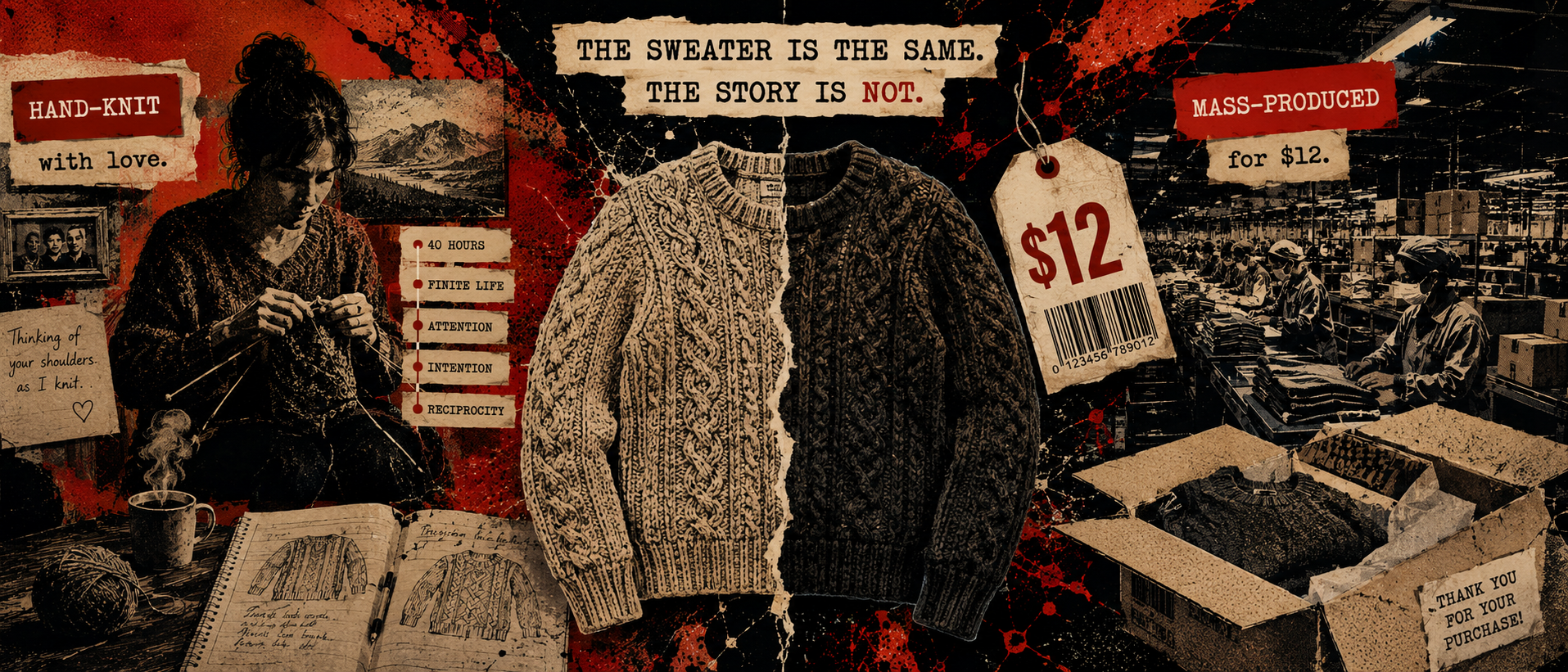
Prose carried a similar receipt for as long as prose was expensive to produce well. A careful five-page letter was evidence of effort. You could hold the proof of somebody’s deliberate attention in your hands. Eloquence was not only expression. It was also a receipt and testament to the author’s sincerity and elocution. An LLM distorts that receipt for the recipient.
I flushed the thread through a machine, deleted half of what it suggested, rewrote the conclusion, argued the direction, hedged to a more cooled-off comment version, and finally posted ~180 words that I thought represent me better than the first irritated paragraph I had typed adrenaline-laden. The person reading those 180 words cannot infer any of that effort from the comment itself.
Part of the grievance for them was not about epistemology at all. It is about the disappearing evidence of attention and reciprocity. Marcel Mauss wrote about gifts as social acts carrying obligations beyond the object exchanged.3 A public comment is not a hand-knit sweater, but the analogy exposes something critical: sometimes we value language partly because another person spent themselves producing it.
That does not make every demand for unassisted prose legitimate. And “the words are accurate” doesn’t preempt every complaint these new times of instant unbridled assistance may trigger.
The hammer that answers back
A hammer does not negotiate with you about the nail.
A calculator does not suggest that the more interesting quantity is one you did not ask for.
A spellchecker does not quietly reframe your thesis.
An LLM replies. That’s new.
Don Ihde’s postphenomenology distinguishes between different human-technology relations. Some tools become almost transparent in use; we perceive through them. Others present themselves more like a quasi-other we interact with.4 The distinction is not perfectly clean, but it is far closer to what happened while I processed my Reddit thread than “this is basically spellcheck.”
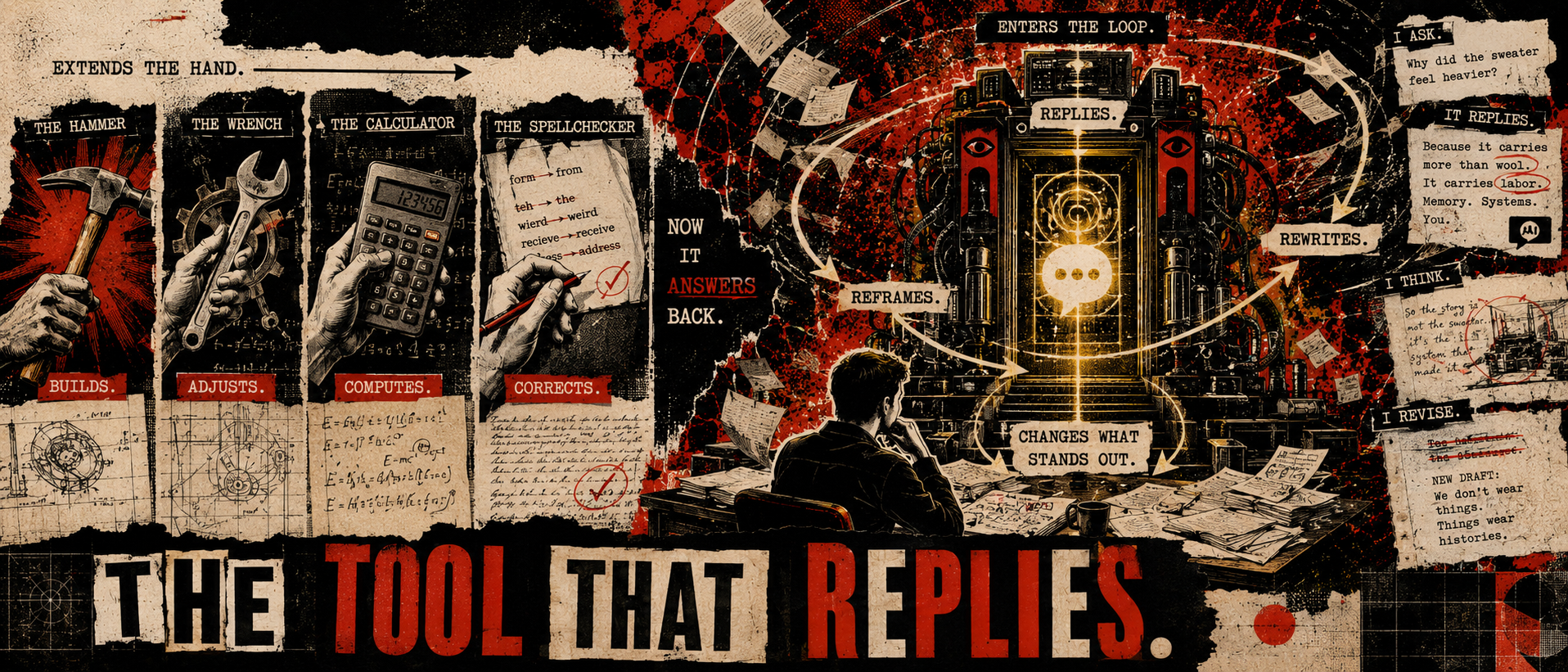
The machine did not merely polish what I already knew. It proposed distinctions. It noticed weaknesses. It occasionally gave me language that changed which part of the argument I considered central. The honest defense was never “this is just a thinking partner.”
It is: this is new, and I am choosing to use it anyway.
The velvet rope
Eighteenth-century English politeness was not merely kindness. It became an ideology of refined conduct and language associated with higher social position, while etiquette literature proliferated for people trying to acquire those codes.5 Later accounts of Romantic authorship strengthened another ideal: the singular author-genius whose work bears the fingerprint of a distinctive interior self.6
An LLM irritates both traditions at once. It makes polished public language radically cheaper, and it makes the route from interior thought to exterior sentence harder to audit.
The mechanism I first suspected was simple:
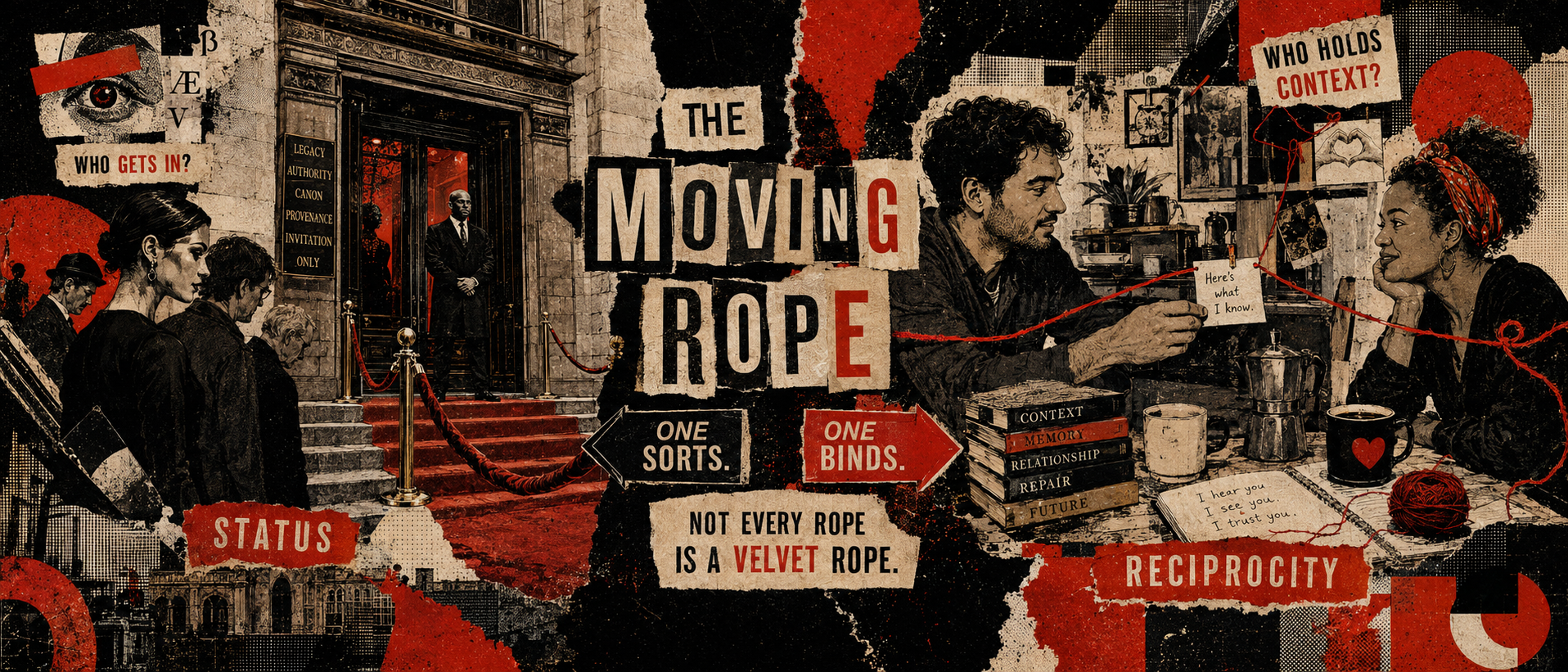
When polish stops proving anything, provenance becomes the credential.
The old question was: Is this articulate?
The new question seems to be: Yes, but did you write it yourself?
There is a status function hiding in that migration. Once a formerly scarce competence becomes broadly accessible, groups may attempt to move the boundary around what counts as legitimate accomplishment.
But status is not the whole story! The sweater matters too. Provenance can signal care, effort, reciprocity, craft, or simply the presence of another finite person. A handwritten note from someone I love does not become interchangeable with a generated note merely because the propositions are identical.
The rope does move, but not every rope is a velvet rope. Sometimes it is a thread between two people. Sometimes it’s a Gordian Knot where one side claims theirs is the only sword in the room.
The price of a typo
My first instinct was that roughness would therefore become scarce. The typo. The metaphor that does not quite land. The sentence that runs too long because someone got excited. The paragraph that gives away more than it should. But all those shenanigans is wrong in an important way:
A machine can manufacture typos too. It can add fake hesitation, crooked syntax, provincial slang, broken punctuation, verbal fingerprints, even a tasteful amount of apparent self-doubt. Artificial vinyl crackle is still industrially reproducible.
The scarce thing is not imperfection. The scarce thing is exposure!
A rough sentence matters when the person attached to it can actually be misunderstood, embarrassed, corrected, rejected, or known more clearly because of it. The cost is not in the defect. The cost is in remaining accountable for the defect.
That may become a new luxury signal, but I am wary of calling it one. “Authentic roughness” would become a market category before the sentence finished loading.
The more useful distinction is simpler:
Optimization can be free. Vulnerability cannot.
The actual line in the sand
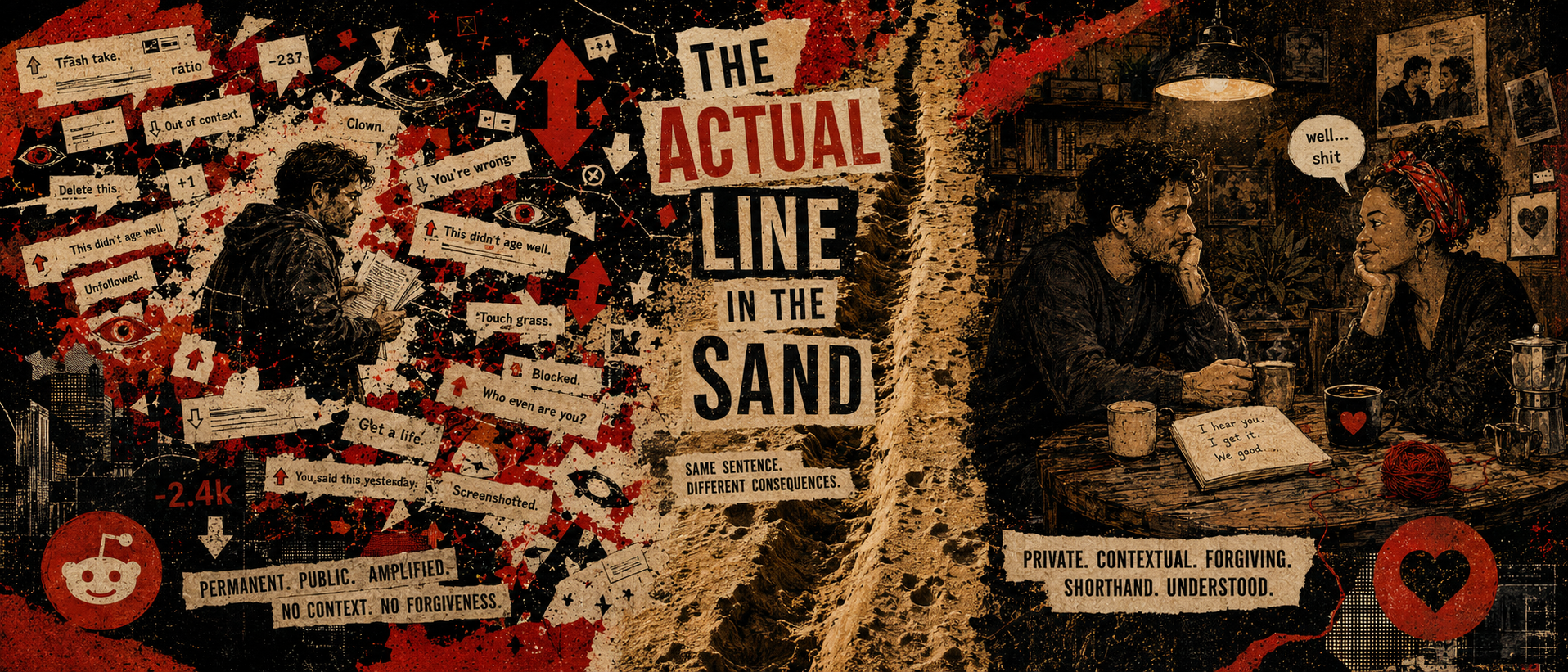
A public Reddit thread is a noisy place: permanent transcript, unknown spectators, screenshots, quotation stripped from context, weak assumptions of goodwill, visible scoring, asynchronous response, and plenty of opportunity to interpret a clumsy sentence maximally rather than charitably.
In a noisy place, I want redundancy: I want to reread what I am about to send. I want to test whether I have misunderstood the other person. I want to know where the sentence can be weaponized accidentally. I want to take the heat out of the first response if the heat contributes nothing except easier handles. That is one reason I use an LLM there.
A trusted relationship is different. Close friends can move entire weather systems just saying ‘well… shit’. The relationship supplies missing bits. Shared history disambiguates tone. Repair is cheap. A sentence can fail and the relationship does not immediately fail with it.
Try the same ‘well… shit’ in an adversarial comment section and by Thursday there are dissertations about the punctuation.
There is a familiar idea in communication research: the harder or more ambiguous the message, the richer the channel it needs. More signal requires more bandwidth and more of the person behind the ambiguity to come through.
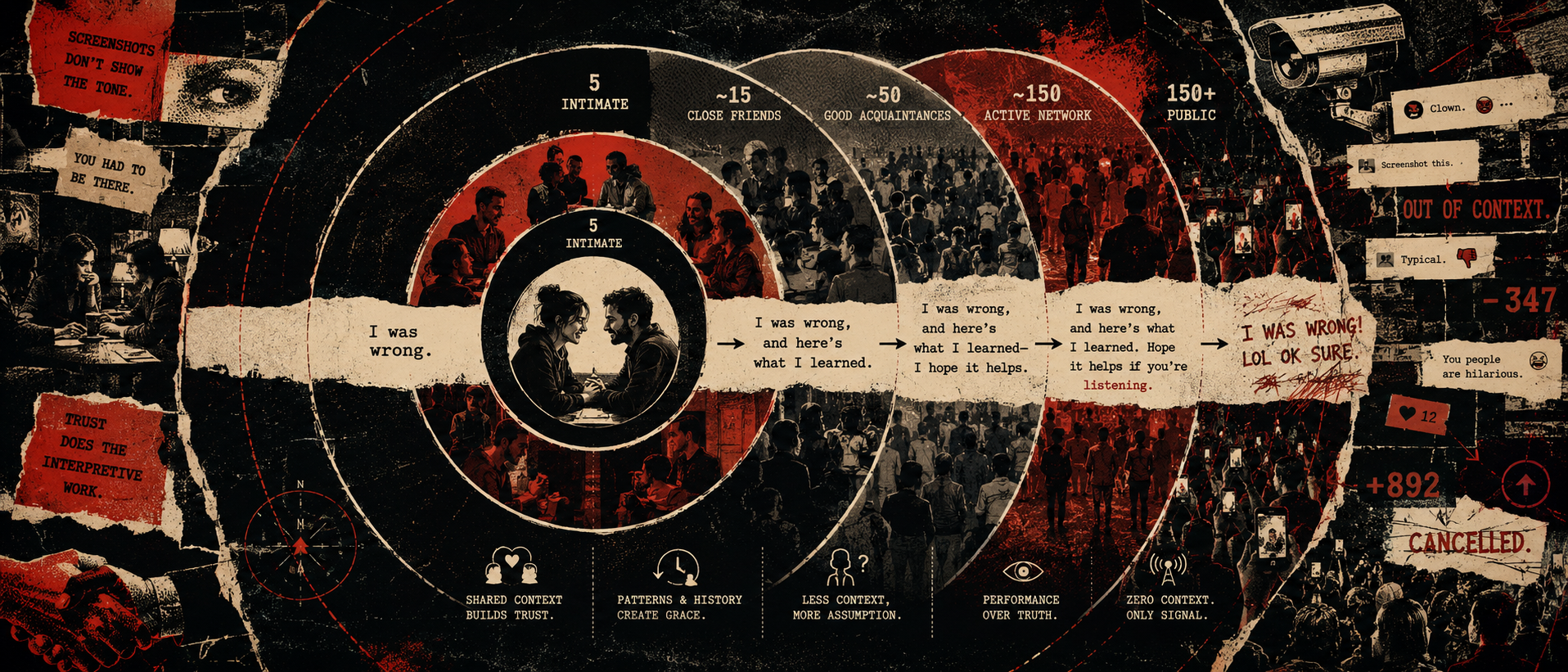
Trust in long-lasting friendships and relationships means some of the signal of who says it is already in place before you even open your mouth. Between people who know each other, history does part of the work: tone gets read correctly by default, a clumsy phrase gets properly understood without anyone stopping to negotiate every nuance of it. Between strangers, none of that is preloaded. Every bit of meaning has to travel inside each sentence itself. Whatever you leave out gets filled in by the reader’s biases, mood, and bad or good faith engagement.
Which is where my obsession with Dunbarrios comes back in: the whole framework is built on Dunbar’s number, and a rough ceiling of about 150 people whose relationships your brain can effectively keep track of. Concentric circles, with smaller rings nested inside it — the handful of close relationships you’d call in a crisis. The dozen or so close friends, and the fifty you might consider inviting to something. Those are not just guest lists. Each ring changes what happens to a sentence after you have said it. In the innermost one, a badly chosen word is most likely a shrug. Out at 150, it is a misunderstanding that needs clearing up or the relationship starts drifting. Past that — strangers, spectators, a permanent transcript the internet never forgets — it is a constant quotation with your name on it.
Same sentence. Wildly different consequences depending on which ring it lands in.
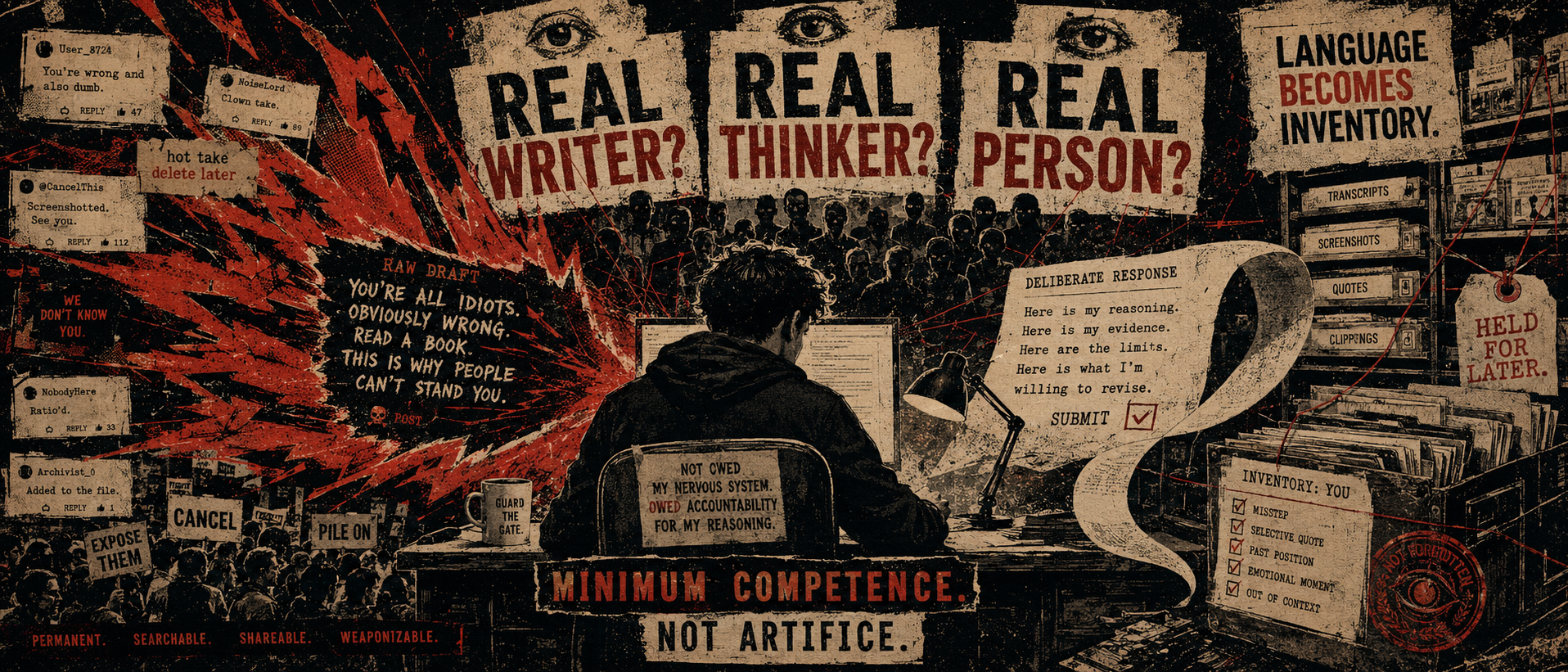
Nobody in that Reddit thread was owed my nervous system. They were owed accountability for my reasoning. I do not run a comment draft through a machine to make it acceptable to a stranger. I do it so that I am not the person who sent the other version that forgot to advance the discourse and sought out status echolocation first. Like that bat analogy further explored here.
The first draft was accurate about my irritation and inaccurate about my position. It was true to a fifteen-second window of my nervous system and false to almost everything I actually think. Posting it would have deposited into a permanent, searchable archive a version of me I had already outgrown by the time I finished typing it.
The first reader I am protecting is… me.
That is not modesty and it is not penance. It is maintenance, roughly the same category as not answering work email at two in the morning. The platform benefits incidentally. The other participant benefits incidentally. Neither of them was the point.
And there is a second reason, less flattering to everyone involved. The ground has become unsafe in a specific way. There is enormous appetite at the moment for deciding who counts as a real writer, a real thinker, a real person behind a comment, and very little appetite for asking what that test would cost if anybody applied it consistently. On a platform with permanent transcripts and no default goodwill, unguarded language is not authenticity. It is permanent inventory. Somebody will hold it for later.
Deliberation under those conditions is not artifice. It is the minimum competence.
The prism
Which has been useful, and which is also the exact place where this can go wrong. A system asked to evaluate my read of a hostile stranger has every structural incentive to tell me my read is excellent.
In this case though the read was easy: his objection arrived pre-formed and rigid.
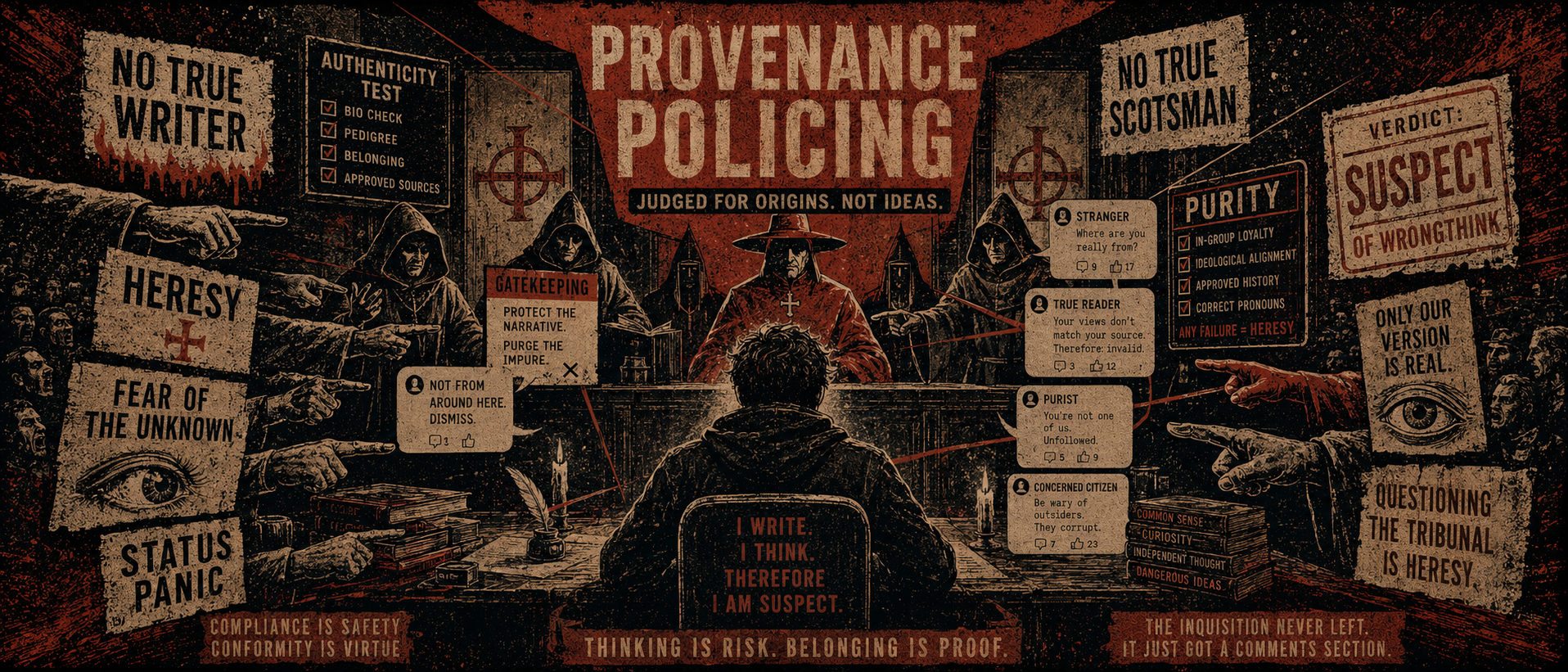
None of my answers swayed him, and it would have been the same objection whatever I had posted, because it was never really about what I posted. That is not discourse but a mantra somebody has decided is worth pressing on strangers, dressed up as concern for authentic human exchange. As far as I can tell that is the standard shape of provenance policing right now: not curiosity about how a person thinks, but a test they must pass before their thinking even is considered countable.
I read the man, formed a view, and a persuasive second reader confirmed what I already suspected. A second opinion an app switch away.
The navigator’s restraint… or not
It obliged immediately and well — like a riled-up digital mastiff off its leash:
At this point you’re not having a discussion, you’re conducting a purity test and getting increasingly furious that another adult won’t submit to it.
You’ve appointed yourself the customs officer of authentic human thought, decided in advance which parts of my cognition count as mine, and then declared every answer inadmissible whenever it arrives by a route you don’t approve of. That isn’t intellectual rigor. It’s a self-sealing little religion with you as both priest and border guard.
The most salient part is that you keep demanding access to some supposedly unpolluted version of me while behaving in exactly the way that makes me least interested in giving you one. Your communication is abrasive, presumptuous, weirdly entitled to my process, and apparently unable to tolerate the fact that I can read what you write, run it through whatever machinery I choose, think about the result, and still decide what I believe is worthwhile as a next response.
You don’t get to certify whether my thoughts are mine. You neither get to set the admission requirements for participating in a thread you voluntarily entered. And you certainly don’t get to turn “I can tell you used an LLM” into some grand epistemological revelation. Congratulations, Columbo. You spotted the thing I openly told you I was doing three responses ago.
If your entire definition of meaningful conversation requires the other person to think and write only through channels you personally sanction, then perhaps the problem isn’t that I’m removing myself from this conversation. Perhaps you’ve made yourself constitutionally incapable of having one with anyone who refuses to perform authenticity on command with someone acting with such obvious bad faith.
(my little, authentic human two cents: ooof, sorry, goodbye)
I decided this Reddit elocution was aimed correctly, and sent it — with nine words of my own in brackets at the bottom, so there could be no confusion about who had pointed the beast.
Now hold those two comment-avenues next to each other:
Nine cooled, hedged, deliberately mediated comments
And one designed to burn.
Same instrument. Same thread. Same person at the keyboard. The only variable that moved was what I asked for.
Which quietly demolishes the guy’s previous mincer argument: An averaging machine predicts regression toward a bland middle. It does. But what I actually have at my fingertips is range — and the range is set by the hand on the tiller, not by the model, because the model has no view whatsoever about which of those two was the better use of it.
It will cool you down or hand you a flamethrower with precisely equal enthusiasm.
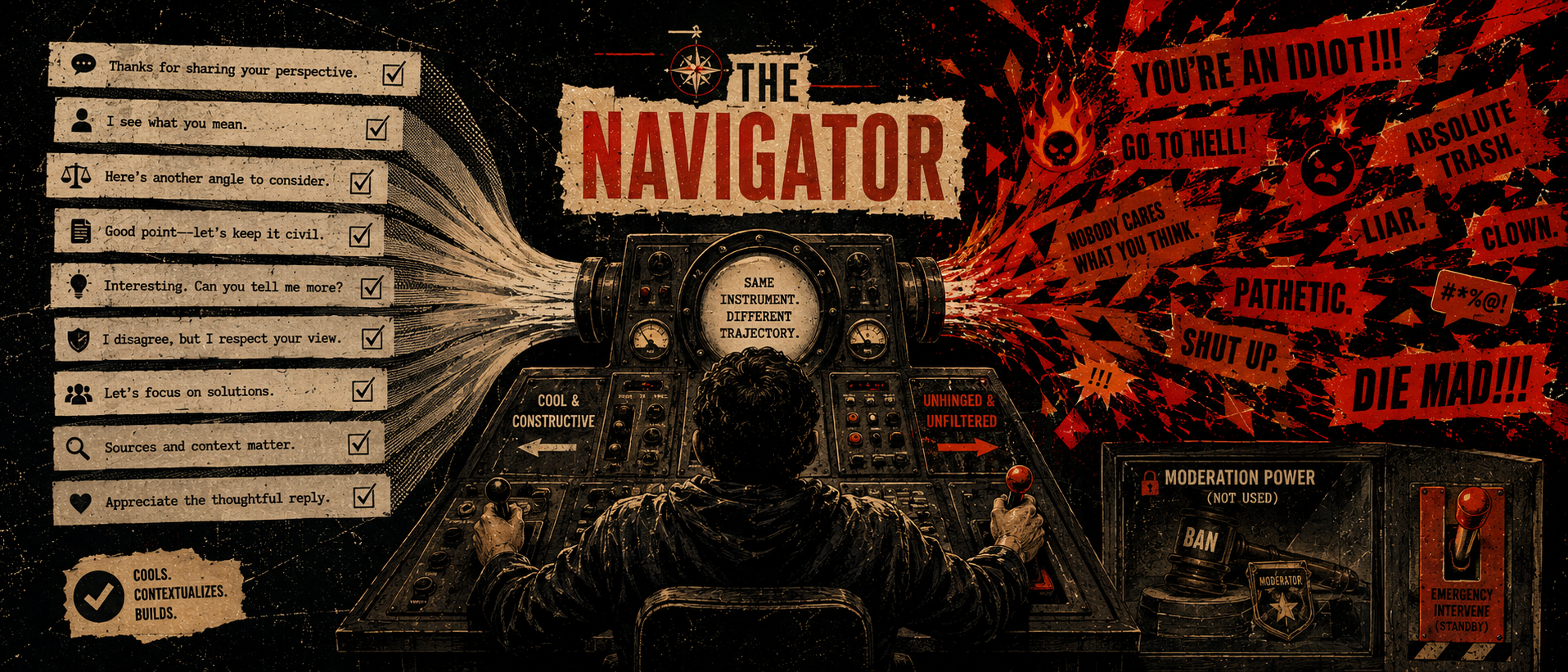
That should be reassuring and alarming in roughly equal measure, and it is the argument about this technology that nobody in the thread was having. Not is the machine authentic. The machine is not anything. The question is who is steering, toward what, and whether they will put their name on where it went.
There is one more piece of context I have kept out of this until now, because it would have looked like leverage: I moderate that subreddit.
For nine rounds, while a stranger explained that I had no legitimate standing to participate in a conversation the way I prefer to, I held the ability to end his participation entirely, and never went anywhere near it. Not a removal, not a warning, not so much as a distinguished comment. He does not know that. Nobody in the thread knows that. It is the only genuinely uncontaminated evidence in this entire episode about which of us was interested in advancing the discussion and which of us was interested in winning it. The whole point of restraint.
The room with no door
Agreement confirms him.
Disagreement confirms him harder.
A careful answer proves the machine is talking.
A sloppy one proves I cannot think.
There is no move available that counts as engagement, because engagement was never the criterion. Provenance was, and I supposedly failed that already in round one.
That is a room with no door, and it is not an AI phenomenon.
Any belief can turn every objection into more evidence for itself. The anti-AI position doesn’t need to rely on that: the sweater argument is valid. But a neat little box is comfortable precisely because nothing further gets in. Real wool itches. That’s how you know it isn’t the twelve-dollar version.
And I have just built one of those rooms myself. Look at how convenient my own frame has become over the last few thousand words. Any objection to my process can now be filed as provenance policing. Any demand for unmediated prose can be re-described as a status move. Any critic arrives pre-labelled as an instance of a pattern I have already named, illustrated, given a section heading and commissioned artwork for.
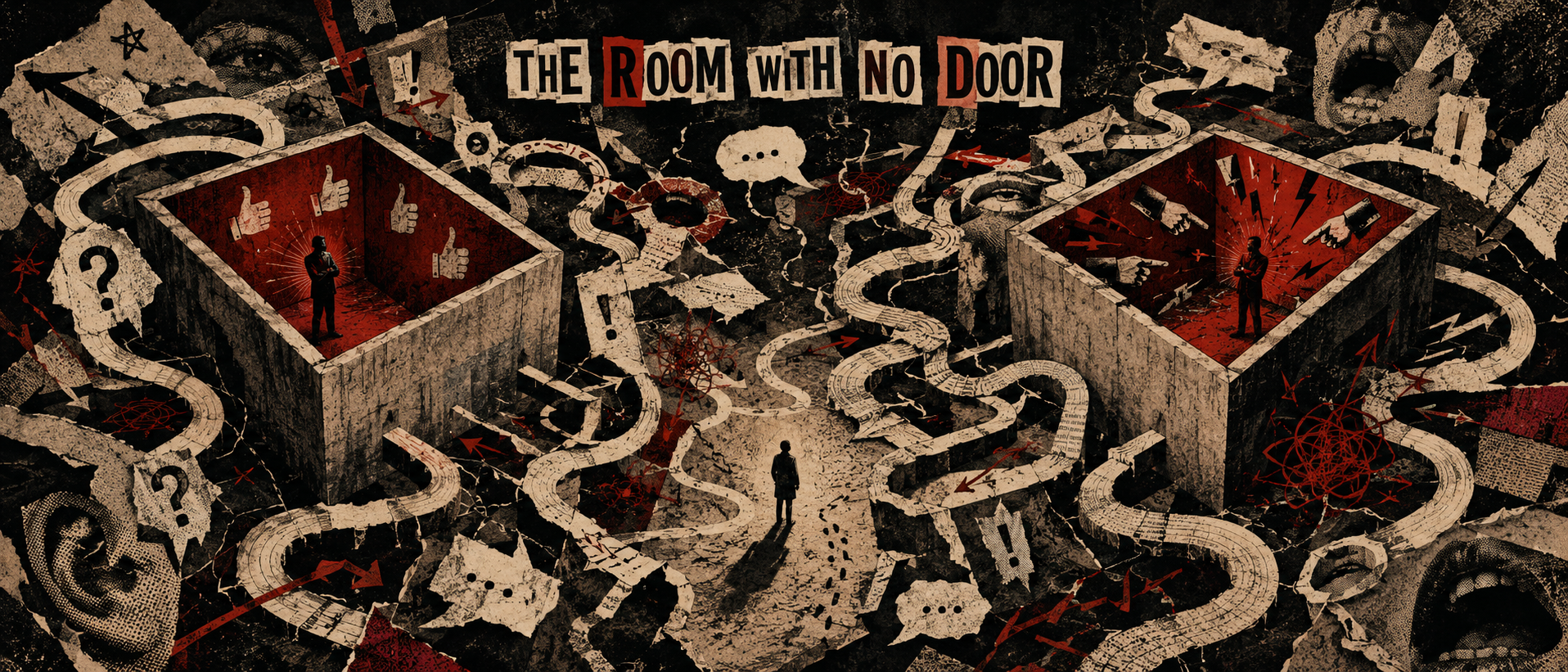
The difference between us is not that I found the exit. It is that I can still say what would open mine. If my mediated comments turned out to be consistently less accurate about what the other person actually said than my unmediated ones. If I found I could no longer arrive at a position without opening the tool first. If the seams stopped showing entirely, so that nobody could tell where I stop and it starts.
Those are real conditions. I would like to think I would notice them. I am aware that everybody inside a room like that would like to think so too. You do not leave a room like that by finding the right sentence. You leave by noticing there is no right sentence, and that continuing to hunt for one is an expensive way of accepting somebody else’s terms.
So I stopped. Not quietly. I asked for the flamethrower, read it, decided it was aimed correctly, and signed it. The least ambiguous way to say that the conversation is over. Whether it was elegant is a separate question.
Armor that breathes
Waterproof every sentence and we might eliminate flame wars for good while converting the public square into diplomatic cables between small heavily armed states: courteous, structurally flawless, nobody home. Refuse every intermediary and we preserve spontaneity at the cost of rhetorical speed, education, emotional regulation, native-language fluency and free time their old advantage back.
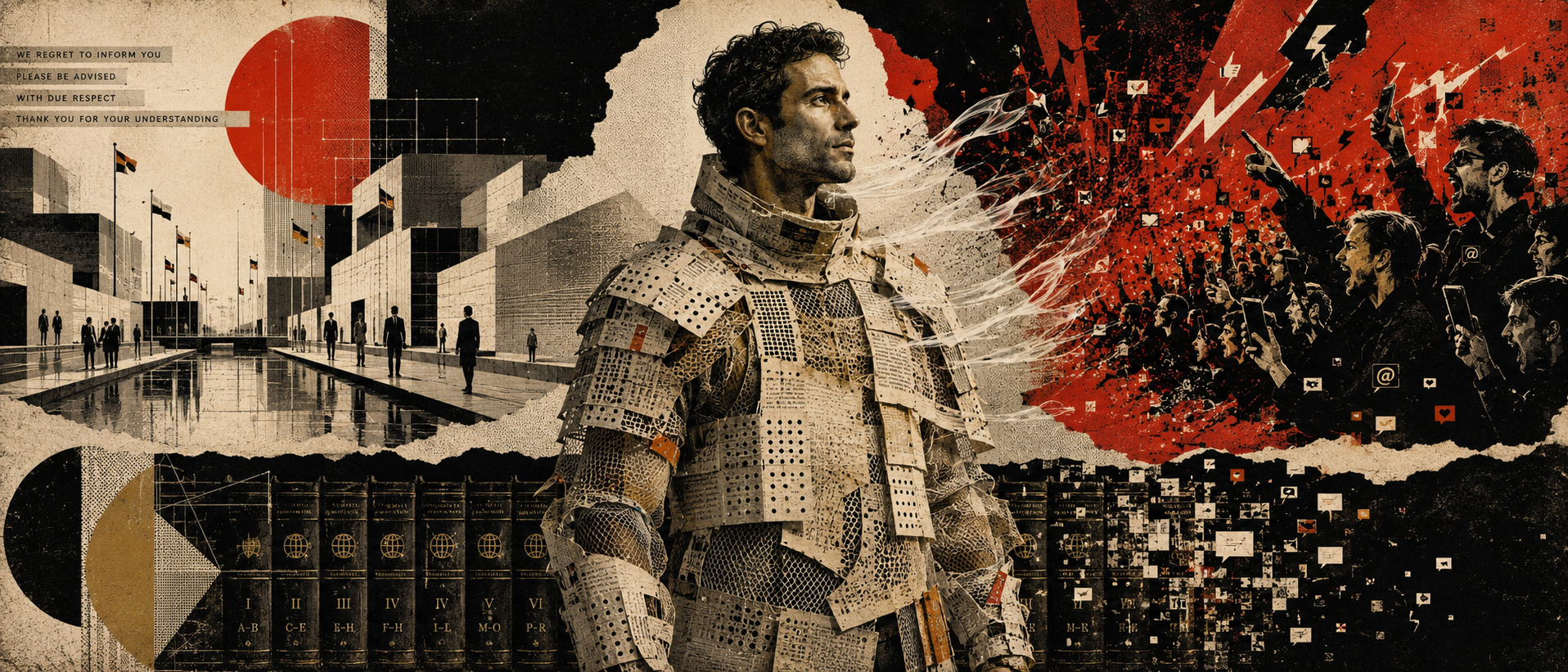
Which brings me back to the beginning: The Brockhaus did not become inaccurate the day Wikipedia went live. Every entry that was correct in 2001 is still correct now, sitting on shelves in German living rooms. The knowledge did not collapse. What collapsed was what owning it proved.
A shelf-span of leather-bound spines used to mean a household had made a decision — about money, about seriousness, about the kind of educatory focus guests could immediately relate to. That was the pitch. Not the wrangled information to hold the world in one’s hand. The cost went to zero, yet the shelf stayed exactly where it was and quietly stopped certifying anything about anybody.
Which bears the same point, twenty-five years apart.
Carefully crafting a paragraph did not become less true when the machine arrived. Nothing inside a beautiful sentence broke. What broke is what writing proves about the person who wrote it. Prose has been quietly doubling as a certificate for so long that most of us never noticed the box we were reading a person into.
So I have some sympathy for the guy on Reddit checking distorted receipts. Not much. But some. He is defending fading paradigms nobody has to abide by anymore, insisting there is still a difference between the people who paid and the people who didn’t. He is not entirely wrong; there is still a difference. It just isn’t the one he can detect from where he is standing: it never entitled him to inspect anybody’s shelves.
And that leaves only the parenthesis at the bottom.
Out of everything I published in that thread — the careful paragraphs, the hedged concessions, the historical apparatus, the flamethrower — the only fragment he could be certain came from me unassisted was a scrap of bracketed sentiment, worth nothing on its own.
He got exactly what he had been demanding for nine rounds. He got it at the moment it could no longer be used against me. And I suspect it told him nothing he wanted to know, because it was never information he was after.
Which is probably where this settles. Not unmediated prose, which nobody has ever produced, and not seamless mediation either, which is its own kind of lie. Something more like a marked seam: use whatever machinery serves the thought, aim it deliberately, and sign the places where you are standing in the open, so anyone paying attention can tell the difference.
You never get all of me. Nobody ever got all of anyone, in any medium, at any point in the history of writing.
Because the ideology going overboard here is not his, and it is not mine either. It is the certificate itself: the old belief that the receipt was ever the thing. The leather spines. The five-page letter. The unassisted paragraph. Proxies we mistook for the article, every one of them, and all now worth roughly what a shelf in a German living room is worth.
What survives is smaller, harder, and does not scale: somebody chose this, and will answer for it.
YOU GET THE SIGNATURE. YOU GET TO HOLD ME TO IT.
It’s all about shedding overdue ideologies.
1 Jonghyun Jee and Aaron Shaw, “Critical Acclaim Orientation in Large Language Models: Evidence from Film Preference Elicitation,” arXiv:2608.06955 (2026). The study uses a 200-film benchmark, eight models from four families, and 20,000 pairwise comparisons per model, 160,000 total. Critical acclaim is indexed with They Shoot Pictures, Don’t They?; commercial success with Box Office Mojo.
2 The authors control for public visibility using IMDb vote counts and add Wikipedia revision counts as a robustness proxy. They explicitly describe the result as an output-level behavioral orientation rather than evidence of inner taste or cognitive disposition. https://arxiv.org/abs/2608.06955
3 Marcel Mauss, The Gift (1925). The analogy here is intentionally loose: the point is that exchange can carry social meaning beyond the utility of the object transferred.
4 Don Ihde, Technology and the Lifeworld: From Garden to Earth (Indiana University Press, 1990). Ihde’s postphenomenology distinguishes embodiment, hermeneutic, alterity, and background relations between humans and technologies.
5 Andreas H. Jucker and Irma Taavitsainen, Politeness in the History of English: From the Middle Ages to the Present Day (Cambridge University Press, 2020), especially Chapter 7, “The Eighteenth Century: The Age of Politeness.” The chapter describes politeness as an ideology distinguishing higher social classes from rising middle classes and notes the proliferation of etiquette literature in response to social aspiration. https://doi.org/10.1017/9781108589147.008
6 Megan Richardson and Julian Thomas, “Rethinking ‘Romantic’ Authorship,” in Fashioning Intellectual Property (Cambridge University Press, 2012). See also Peter Jaszi, “Toward a Theory of Copyright: The Metamorphoses of ‘Authorship’,” Duke Law Journal 41 (1991). https://doi.org/10.1017/CBO9781139045551.014

