
Each blog post also comes with its own podcast episode powered by Google’s NotebookLM.
A different interpretation, a different take, and KindredSoul-reviewed:
The cup is facing down. A coat hangs beside the door, one sleeve turned inside out. Somewhere, a kettle is about to click, and someone is asking someone else to stay until it does.
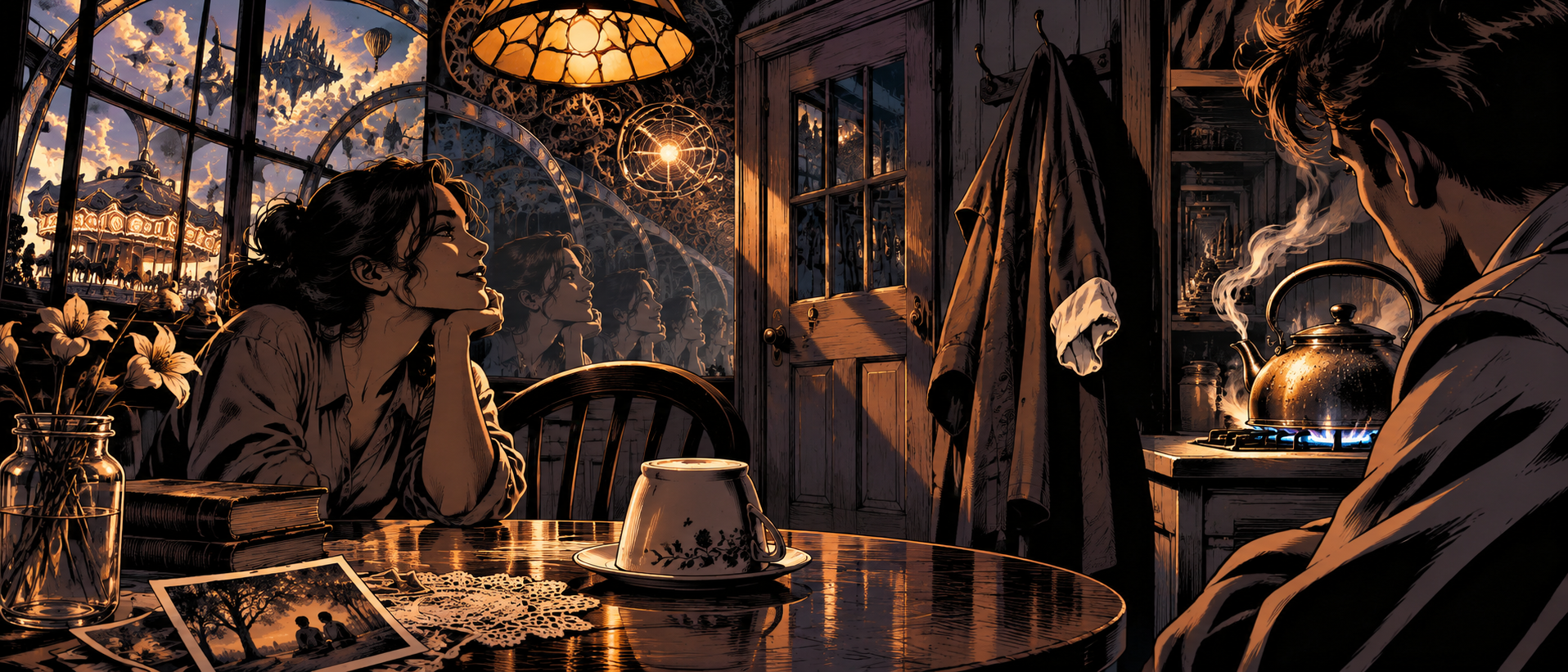
None of this is happening anywhere I can physically see. It’s happening in a song called The Misremembered World, which happened to emerge from another evening of my ongoing experimentation with Suno and what I’ve come to call Recursive Plunderphonics.
And somehow, there I am.
Not in the room described by the lyrics, necessarily. More like in the peculiar emotional space conjured by their arrangement, the music surrounding them, and whatever autobiographical machinery my mind happens to recruit in response. The song knows nothing about me. I know rather little about the imaginary room. Yet an encounter takes place, and I find myself marveling at something that didn’t exist for me until a short while ago.
ResPerspective.
A word that has been forming in my mind as I find myself loading moments with emotional resonance, marveling at fleeting creations slipping out from under my fingertips. The evening furnishes another sequence of remixes, each recognizable as a variation of something already familiar, yet each carrying its own particular take. I move from one to another, sometimes finding little to appreciate, sometimes encountering a passage that catches me with an almost embarrassingly naïve immediacy.
Yesss.
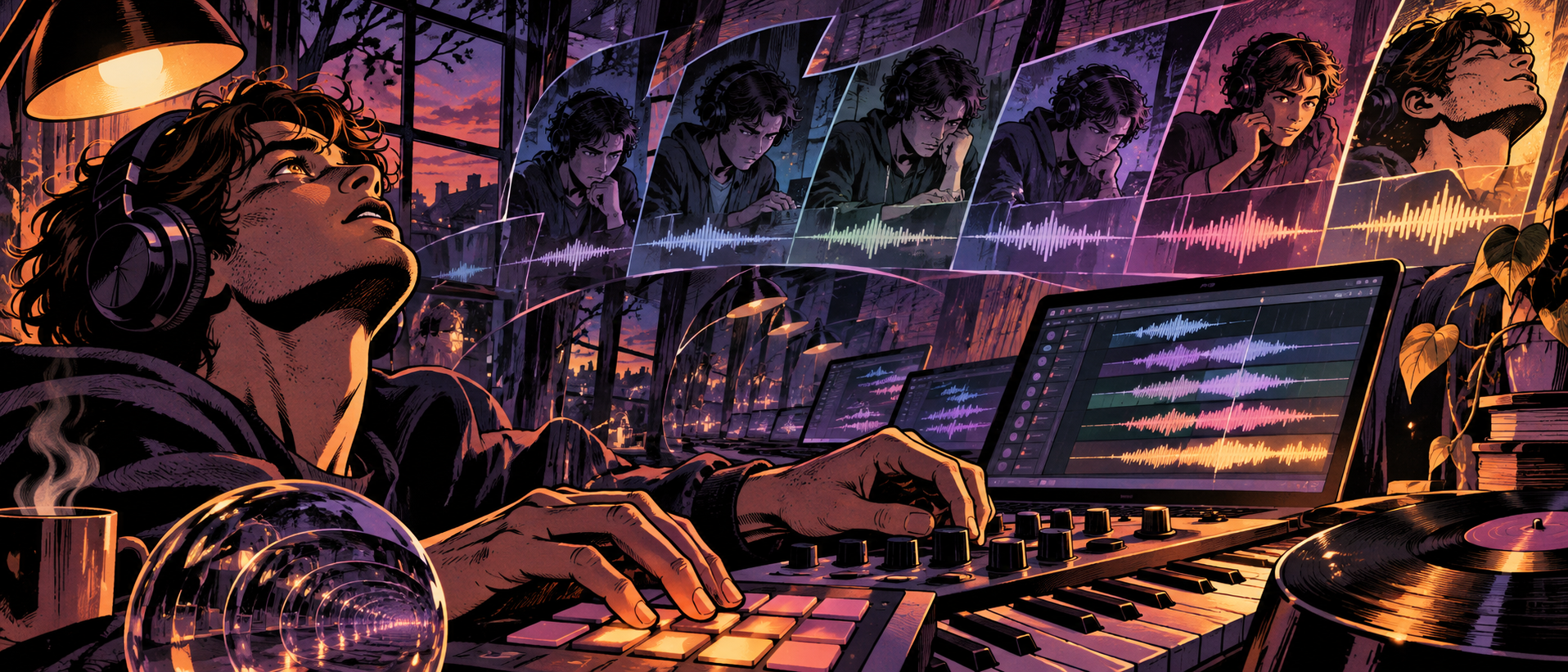
And then, almost in the same breath, I find myself narrating what just happened. I can feel the music, follow its lyrics, surrender a few minutes to whatever emotional tides happen to swell, and reposition my perception to examine the very experience I’m having.
The shift interests me almost as much as the music itself.
I can feel my way through the present and then rebalance my mental posture toward something resembling neutral objectivity. Although, strictly speaking, there’s nothing entirely objective about that posture either. The observer is still me, equipped with the same memories, preferences, cultural conditioning, and biological apparatus that made the initial experience possible.
Still, the distinction is tangible. I can be overwhelmed by something and simultaneously wonder about the overwhelming. I can notice my own appreciation, appreciate that appreciation, and return to the song without demanding that my little excursion into reflective consciousness explain away the magic.
That conscious repositioning is what I mean by ResPerspective.
Although it turns out the term has considerably more territory to cover.
Consider listening to Hotel California for the umpteenth time. The warm smell of colitas rises into the air just that certain kind of way that only I can personally allow to happen. Somebody else hears exactly the same recording and inhabits an entirely different encounter. Somebody else again finds the whole business overplayed and changes the station.
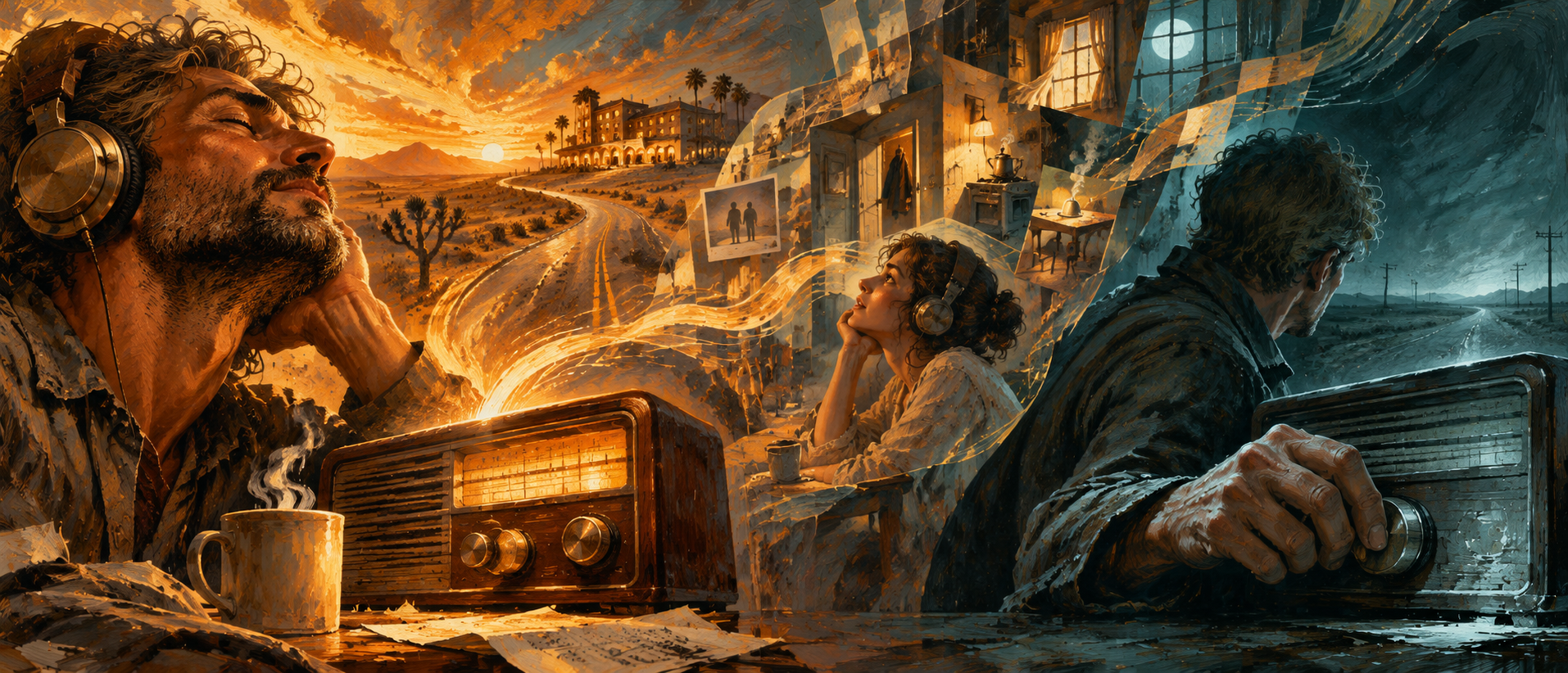
Even I cannot reliably repeat my own experience. The same song reaches a different version of me every time. Mood, memory, expectation, locality, age, recent encounters, and the peculiar circumstances of the day all participate in determining whether something resonates, irritates, or passes through unnoticed.
The recording remains remarkably stable. The perceiver does not.
Which raises an interesting question about what we actually mean when we call something a classic.
Millions of people can become intimately familiar with the same cultural artifact, yet not one of them can occupy another’s precise experience of it. Our private encounters remain inaccessible in their totality. We can describe what moved us, point toward a passage, articulate a memory, or attempt to recreate a feeling. But every articulation is an approximation, another experience in its own right.
To borrow a term from Rupert Sheldrake, one might be tempted to describe the accumulating cultural phenomenon as morphic resonance. I find the metaphor enticing, although his proposed mechanism remains scientifically unsubstantiated, and I don’t need an invisible field to account for what interests me here.
There is already something extraordinary about the ordinary explanation.
An artifact persists. People encounter it, remember it, recommend it, imitate it, argue about it, and occasionally build parts of their identities around it. Cultural familiarity amplifies its opportunities to resonate. Recognition invites further recognition. A song becomes an evergreen, a film becomes a classic, and eventually somebody awards its makers an appropriately polished object to commemorate whatever has happened.
The Hall of Fame is hardly a precision instrument for measuring the depth of human experience, but apparently we do enjoy furnishing our idols with permanent addresses.
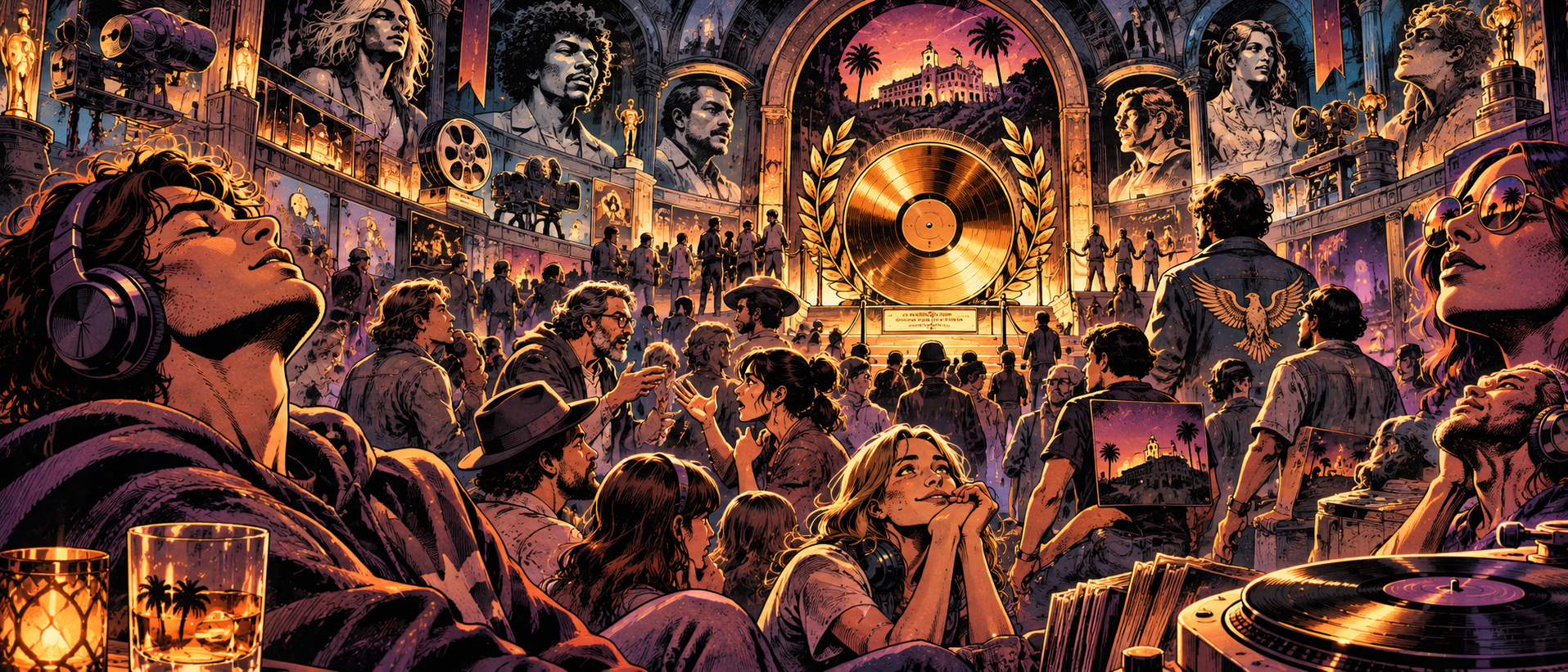
The important distinction, I think, is that cultural endurance demonstrates the persistence of encounters, not necessarily the depth of any individual encounter. Popularity can facilitate resonance without proving it. Distribution, historical circumstances, promotion, repetition, and outright luck can all influence which creations become available to future generations.
A one-hit wonder may consequently linger in the shared imagination for decades while something profoundly affecting remains virtually undiscovered.
Which brings me back to my personal slot machinery.
Suno makes it possible to pull the lever over and again, generating variations whose resemblance to one another may be obvious, while their differences sometimes carry disproportionate emotional significance. A slight shift in vocal delivery, an unexpected instrumental passage, the curious relationship between a lyric and its musical setting, and something clicks.
The process is not entirely random, of course. Each iteration inherits constraints from previous choices. I listen, select, discard, reconsider, and feed what survives back into the machinery. Recursive Plunderphonics allows me to explore a landscape of possibilities I could neither fully anticipate nor deliberately compose in every detail.
This is what I find so appealing about the arrangement: I can surprise myself with something I helped bring into existence.
I am Audience Member #1.
An unusual privilege, perhaps, given that I also happen to be operating the machinery. Yet the surprise is genuine. The emotional response cannot be programmed merely by requesting it, and knowing how a creation came about does not preclude being astonished by its arrival.
Naturally, I can also tell shit from Shinola. At least within the jurisdiction of my own perception.
The Yesss pile grows. So does the No, not this pile, whose contents are destined for the wonderfully efficient pervasive forgetfulness that eventually devours so much of what we create and consume.
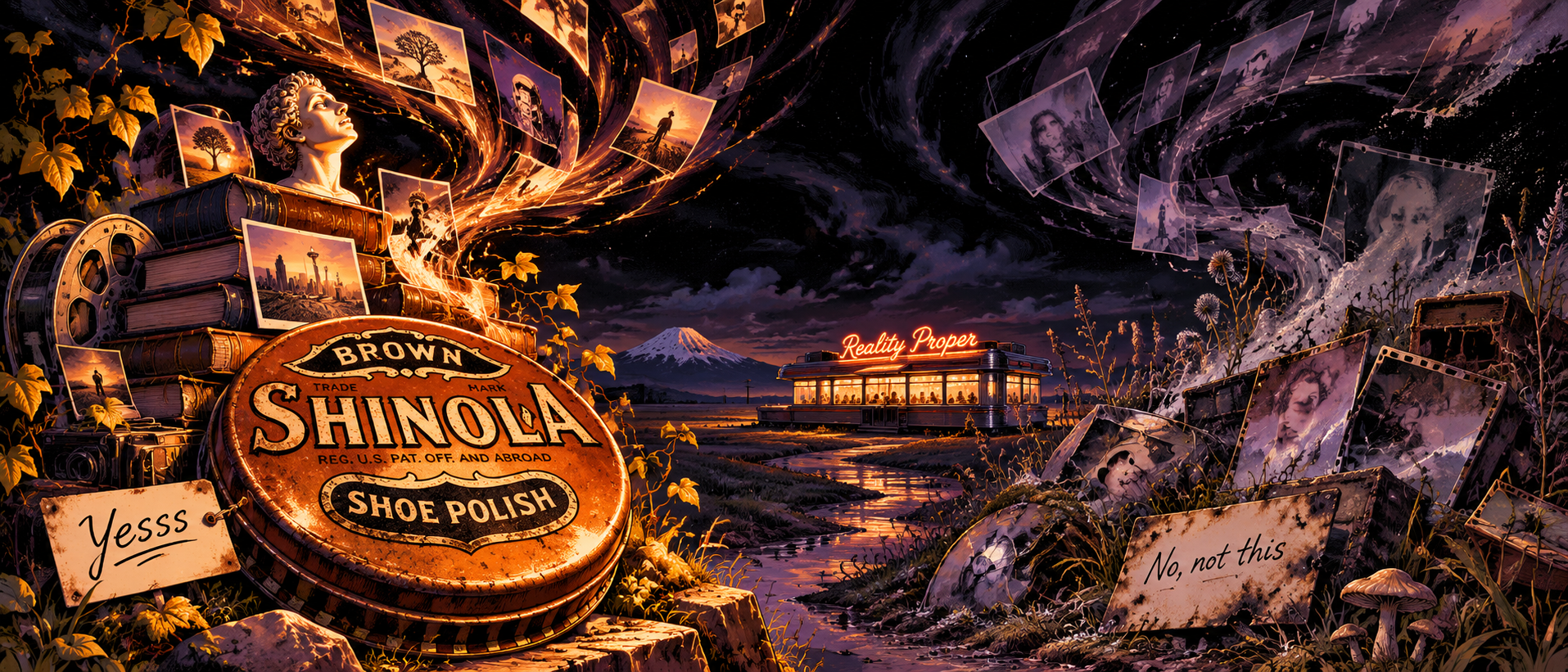
There is no shortage of material for either.
But the existence of those piles matters because it reminds me that receptiveness is not indiscriminate enthusiasm. I can reject a hundred iterations without dismissing the process that produced them. I can appreciate one without pretending it warrants universal recognition.
And I can publish what resonates without assuming that anybody else is consequently obliged to resonate along.
There is no logical guarantee that hearing leads to being heard. Nor that being heard produces appreciation. Certainly not that appreciation translates into cultural persistence.
But none of those uncertainties can undo the encounter that already happened.
The thought occurred. The creation emerged. The experience altered something in me, even if only the next thought, the next selection, or the next few minutes of an evening. Causality has already entered the room. Whether it will ever be recognizable outside it remains another matter entirely.
And this is where happenstance enters ResPerspective as something more fundamental than a mere supplier of lucky accidents.
I recently watched a documentary about the making of Fight Club, a film whose production history fascinates me almost as much as the finished work. The sheer convergence of talent, the casting decisions, the painstaking attention to minute details, the contributions of people exercising their respective crafts, and the improbable circumstances through which all of this eventually became a coherent, shareable experience.
Repeated strokes of logos, expressed in a kind of fateful combinatory mastery, with lucky little accidents exerting sometimes enormous influence on the eventual whole.
There is an almost unfathomable complexity to such undertakings.
And then comes the additional happenstance of reception. Fight Club did not initially enjoy the theatrical success that its subsequent cultural reputation might suggest. Its later life through home video and accumulating appreciation helped establish the status we now retrospectively associate with it.

The finished film is one thing. The journey through which it came into being is another. And the documentary, by making that journey more tangible, adds an entirely new dimension to my appreciation of something I already knew.
The marvelous consequence is that I can revisit the same film while possessing an enlarged capacity to experience it.
Nothing in the original artifact needs to change.
Of course, documentaries have their own talent for making happenstance appear almost inevitable. The story is told afterward, with the surviving decisions neatly visible and the countless alternatives relegated to the shadows. What looks like destiny in retrospect may have felt considerably less coherent to the people making decisions at the time.
That qualification doesn’t diminish the marvel. It helps locate it.
Human mastery and happenstance are not competing explanations. Talent, labor, judgment, circumstance, and luck interact, sometimes yielding something whose coherence is far more impressive than the apparent fragility of its assembly would suggest.
I cannot conclude that every improbable convergence produces greatness. Most don’t. Nor can I infer that the eventual greatness of a work proves some predestined significance in the accidents preceding it.
But I can marvel at what happened.
And, upon discovering more about how it happened, marvel differently.
ResPerspective is also the rule of marvel in the making.
Which suggests a somewhat eccentric proposition: I can forge myself an empire of awe.
Not because I possess anything extraordinary, necessarily, but because my capacity to encounter and appreciate things is itself extraordinary. A film, a documentary about that film, an obscure video with three appreciative viewers, a familiar recording that suddenly sounds different, or a newly generated song arriving unannounced from another iteration.
Each demands a portion of the same finite physical bandwidth.
Time keeps ticking, second-by-speedsecond.
An hour spent immersed in a universally celebrated masterpiece and an hour spent marveling at something almost nobody else has encountered consume precisely the same quantity of lived time. That doesn’t establish that both experiences are equally rich or significant. Some encounters leave me cold, some exhaust my receptiveness, and some linger long after their immediate circumstances have disappeared.
But cultural recognition cannot determine the experiential value of that hour on my behalf.
The private encounter has its own reality.
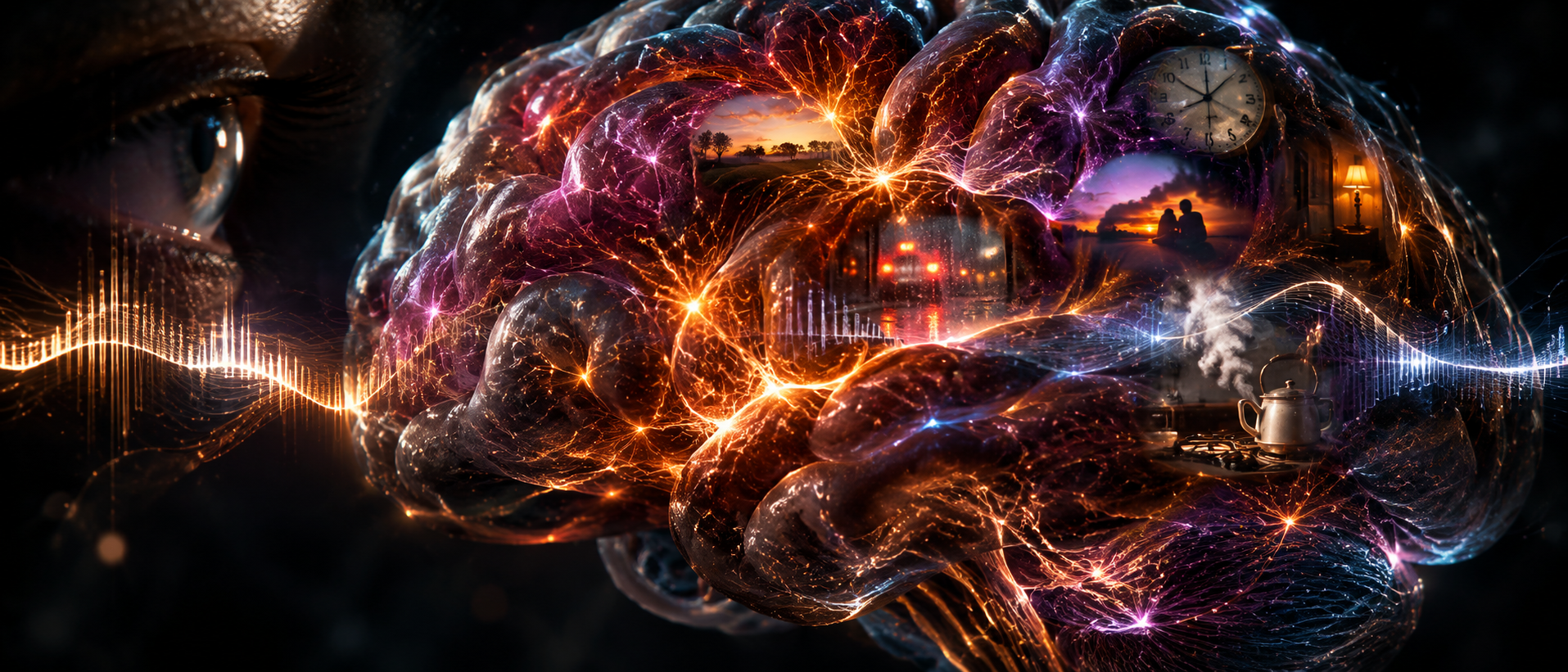
And its own biological costs.
I find myself increasingly fascinated by the fact that I am physically capable of being moved in the first place. That a sequence of sounds can stir memory, anticipation, longing, delight, melancholy, or some compound emotion for which I haven’t invented the appropriate word. That my nervous system can sustain an experience of such intimate significance while simultaneously furnishing the conscious capacity to recognize it happening.
Whatever the precise neurological machinery underpinning these events, the fact that I can experience them at all deserves a certain respect.
ResPerspective contains respect for a reason.
Not merely respect for the artist, the artifact, or the labor involved in its creation, but respect toward the perceptive biological machinery that makes appreciation possible.
It is a finite endowment. I can neglect it, exhaust it, overwhelm it, or cultivate the circumstances under which it becomes more receptive. I cannot simply command awe to appear. But I can make myself available to its possibility.
Which brings me to another rather stubborn ambition.
To break loose the masked crust of indifference.
I don’t beg to differ out of an overabundance of skepticism.
Skepticism has its uses. It helps distinguish an intriguing metaphor from a scientific explanation, a persuasive account from a convenient story, and my subjective enthusiasm from a claim about universal artistic merit.
But it can also become a perceptual habit, a posture of practiced detachment that mistakes the refusal to be impressed for evidence of superior judgment.
There is little intellectual achievement in becoming so adept at detecting imperfections that one loses the capacity to experience anything else. Bringing a clipboard to a séance, and then filing the séance as defective I called that elsewhere.
I don’t want skepticism abolished. I want it available when useful, rather than permanently stationed at the entrance to every encounter demanding credentials before admitting wonder.
And I certainly don’t want the accumulated demands of professional life, with their insistence on measurable outcomes and demonstrable value creation, to determine whether an evening of creative exploration counts as worthwhile.
A few minutes of awe are not a failed business model merely because they lack a paying audience.
Although, admittedly, they aren’t a business model either.
That distinction is worth maintaining.
There are things I hope to communicate, creations I hope others will encounter, and possibilities whose realization depends on more than private appreciation. Publishing matters. Discoverability matters. Craft matters. The response of an unfamiliar audience can reveal weaknesses that my intimacy with the work conceals.
But those considerations belong to the subsequent journey of the creation. They need not retroactively govern the legitimacy of the experience that brought it into being.
I can post and publish without knowing whether a particular creation will ever catch fire.
I can acknowledge that its impact on me says little about the probability of such an outcome.

I can even imagine the gate eventually flooding, a personal resonance finding another perceiver, then another, until something resembling a cultural phenomenon begins to emerge. The possibility remains real without becoming a prediction.
And when nothing happens?
Well, something already did.
Which brings me back to The Misremembered World.
There is a particularly curious passage in the song:
One room, two versions
One door, no key
I reach for what was never there
It reaches back for me
I find those words revealing, not because they establish some universal truth about memory or absence, but because they leave sufficient room for my own experience to participate.
The room can hold two versions without either being an accurate inventory of what happened. The reaching can be an act of remembrance, imagination, longing, or misrecognition. The ambiguity allows an encounter whose personal meaning the song itself needn’t specify.
And there is something wonderfully appropriate about a song called The Misremembered World becoming a companion to these reflections.
Memory is no perfect archive. The conscious perceiver brings yesterday into today, rearranges its significance, discovers previously unnoticed details, and sometimes fills the gaps with things that were never there. Not every such reconstruction is an improvement. A sufficiently persuasive memory can mislead as effectively as it can enrich.
Yet without the capacity to carry and reinterpret experience, much of what we call appreciation would be impoverished.
The documentary changes the film I remember. The remix changes the melody I thought I knew. The lyrics summon an imaginary room whose emotional furniture I somehow recognize.
And I change in the process.
I don’t need to establish that any of this is historically momentous. I don’t need to demonstrate that my particular musical discovery deserves a place alongside the cultural pillars whose sustained resonance has survived generations.
I can simply acknowledge that, for the few minutes during which the song plays, the experience is happening.
And that I am extraordinarily fortunate to be equipped to notice.
The song ends quietly. The cup is dry, the note is gone, and the door is left the way it was.
I may listen again. I may find myself feeling something different. Perhaps the next iteration will make this one seem like a preliminary sketch, or perhaps this is the version whose peculiar accidents I will continue to favor.
I cannot know beforehand.
That’s the happenstance of ResPerspective.

The possibility of marvel remains available, but its arrival cannot be guaranteed, its meaning cannot be entirely transferred, and its worth needn’t be settled by the number of people who eventually share it.
Meanwhile, another song begins.
The kettle clicks. And I find myself listening.

